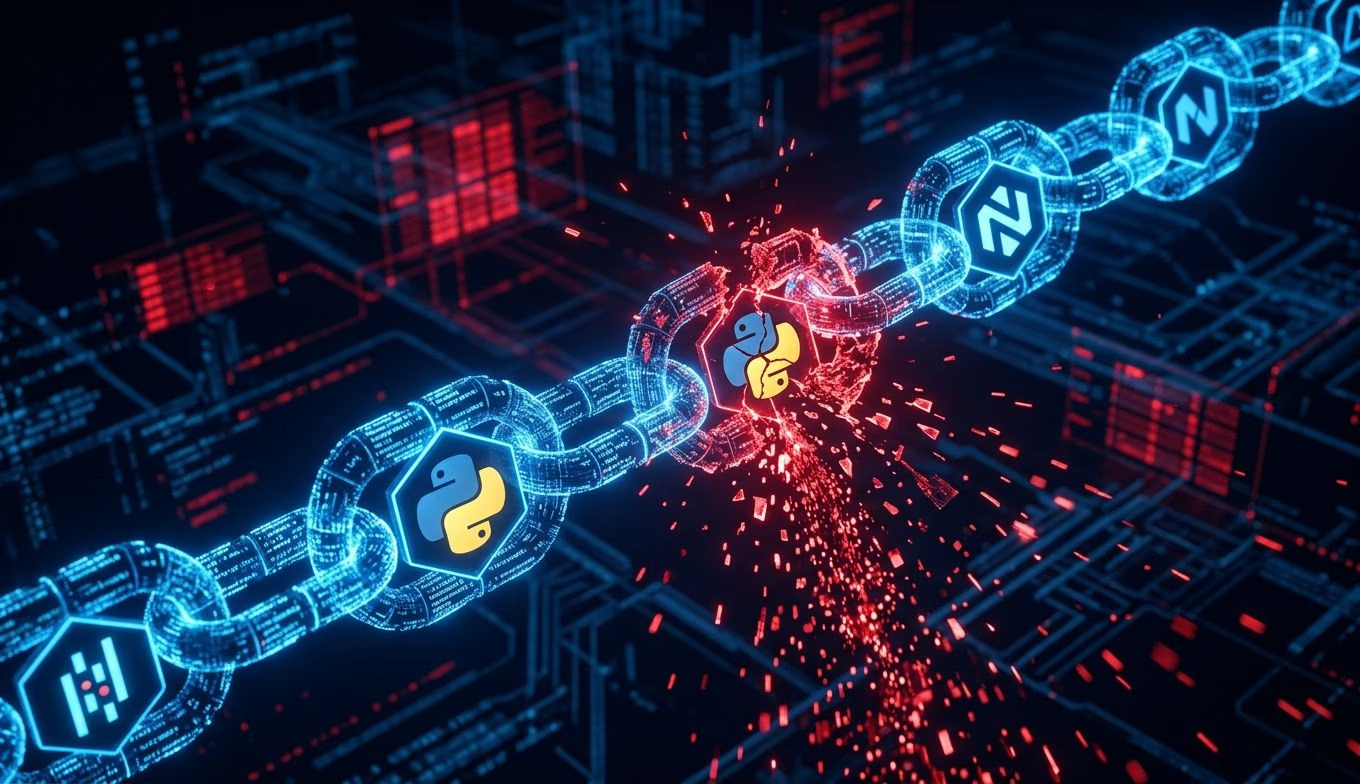
Last Tuesday, a Python library called LiteLLM got hit by a supply chain attack. If you haven't heard of it, your dev team probably has. Think of it like a universal remote for AI. Without LiteLLM, every AI provider (ChatGPT, Claude, Gemini) speaks its own language, with different setup and different code. LiteLLM lets developers talk to all of them through one interface. Over 40,000 developers on GitHub use it.
Two versions (1.82.7 and 1.82.8) were poisoned with malware that stole cloud credentials, SSH keys, and crypto wallet files from anyone who installed them. The attack was discovered by FutureSearch on March 24, and PyPI has since locked the compromised packages.
A supply chain attack targets the open-source libraries developers depend on, injecting malware before it reaches your codebase. Because LiteLLM touches so many AI workflows, it was a high-value target.
What actually happened with LiteLLM?
The attacker (linked to a group called TeamPCP) used two different methods. In version 1.82.7, malicious code was embedded in the proxy server module. In 1.82.8, they injected a .pth file that runs automatically when Python starts, no import needed. Both versions did the same thing: fingerprint the system, collect every credential available, encrypt everything with 4096-bit RSA, and send it to an external server.
The stolen data included AWS tokens, Google Cloud keys, Kubernetes configs, SSH keys, and browser data. If your machine had access to production systems, the attacker now did too.
Why should Malaysian businesses care about supply chain attacks?
You might think this only affects developers. It doesn't.
If your company uses AI tools (and in 2026, most do), your tech team pulls in open-source packages regularly. Every pip install is a bet that the package hasn't been tampered with. That the maintainer's account wasn't hijacked. That someone actually checked before hitting enter.
Supply chain attacks have increased nearly 4x since 2020, according to IBM's 2026 X-Force report. AI libraries are the newest high-value target because they often have access to API keys, cloud credentials, and customer data pipelines.
For Malaysian businesses, there's a PDPA angle here. If stolen credentials lead to unauthorized access to personal data, that could trigger a reportable breach. The cost goes beyond fixing servers: regulatory penalties and lost customer trust.
We wrote about vibe coding security risks last week, where developers trust AI-generated code without proper review. Same problem, different angle: trusting AI tools without vetting the supply chain behind them.
How do you protect your business from supply chain attacks?
You don't need to become a security expert. But you do need to ask your tech team the right questions.
- Lock your dependency versions. Don't auto-update packages in production. Pin specific versions and only upgrade after review. If LiteLLM users had pinned to 1.82.6, they'd have been fine.
- Use a dependency scanning tool. Snyk, Socket, or GitHub's built-in Dependabot can flag suspicious package changes before they hit your servers.
- Limit credential access. Your dev machines shouldn't have production AWS keys sitting around. Use short-lived tokens and rotate credentials regularly.
- Review your AI stack. If your team uses LiteLLM, LangChain, or similar libraries, ask them: which versions are we running? Are we scanning for known vulnerabilities? What happens when a package gets compromised?
Our take: none of this is surprising. The AI tooling ecosystem moves fast and security lags behind. These libraries are powerful, but many are maintained by small teams with limited budgets. Still use them. Just treat them with the same caution you'd give any vendor who has access to your systems.
We use open-source AI tools every day in our AI solutions and cybersecurity work. We also vet our dependencies, lock versions, and run automated security scans. If you're building anything that touches customer data, you should too.
What to do right now
If your team uses LiteLLM, check your installed version today. Versions 1.82.7 and 1.82.8 are compromised. Downgrade to 1.82.6 or wait for a verified clean release. Then rotate any credentials that may have been exposed: cloud API keys, SSH keys, database passwords.
If you're not sure whether your team uses it, ask. Even if the answer is no, you'll learn something about how your team manages dependencies.
At Gotchaa Lab, we help Malaysian businesses build secure software and audit their AI tooling. Talk to us if you're not sure where your supply chain risks are.
This article provides general cybersecurity information and does not constitute professional cybersecurity advice. Consult a qualified security professional for your specific situation.
References
- FutureSearch: LiteLLM PyPI Supply Chain Attack
- ARMO: The Library That Holds All Your AI Keys Was Just Backdoored
- IBM 2026 X-Force Threat Intelligence Index
- Snyk: How a Poisoned Security Scanner Became the Key to Backdooring LiteLLM
- XDA: A popular Python library just became a backdoor to your machine