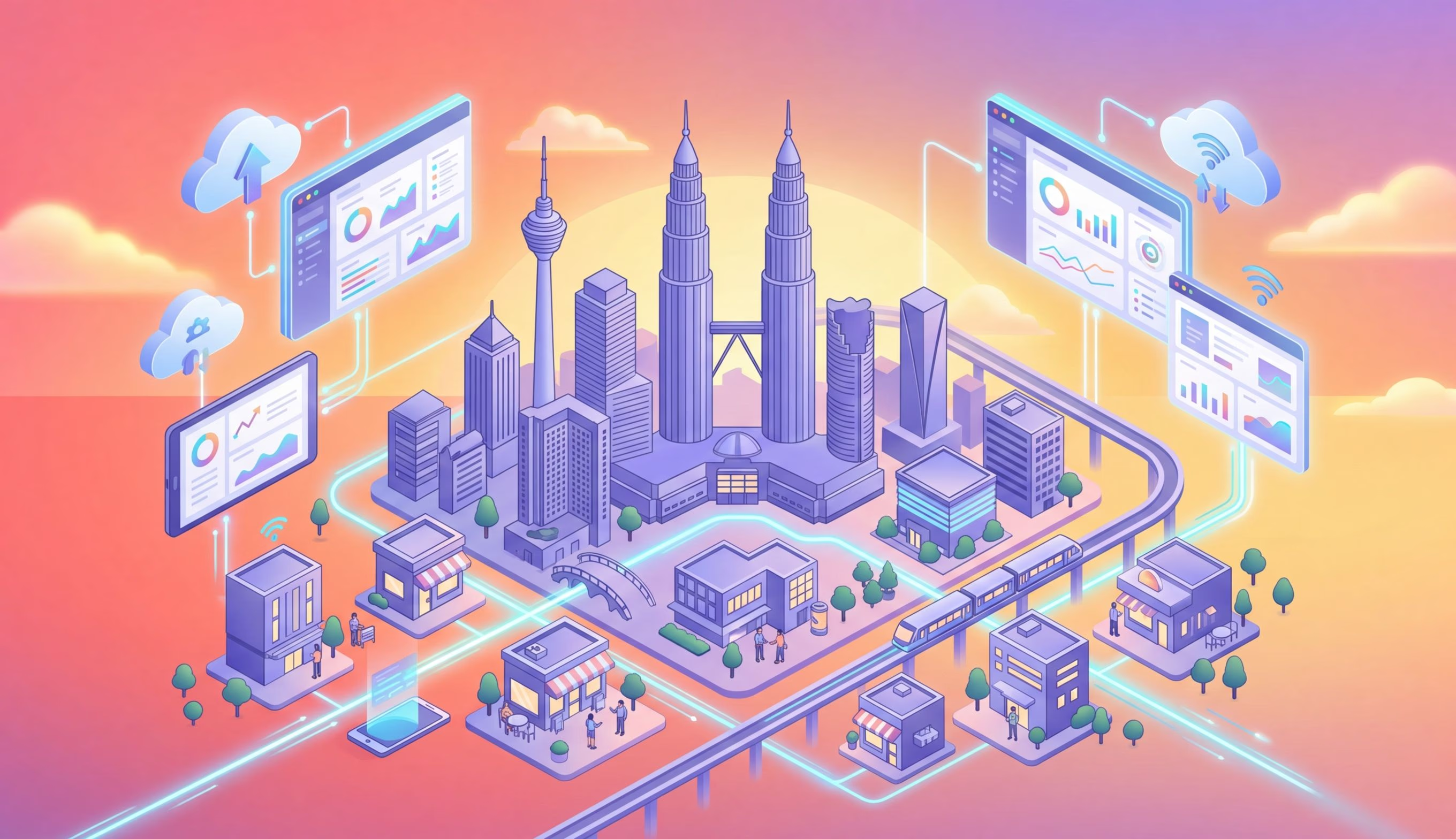
Looking for the best SaaS companies in Malaysia? Here are 20 homegrown tools worth knowing in 2026, grouped by category, for business owners picking software that actually works locally (not for vendors pitching services).
Malaysia's SaaS market was worth USD 1.01 billion in 2024 and is forecast to reach USD 2.36 billion by 2030 (18.48% CAGR), according to TechSci Research. GetLatka tracks 92 Malaysian SaaS companies, with combined revenue near USD 718 million.
Most "top SaaS companies in Malaysia" articles are undifferentiated lists. This one is a directory: 20 companies doing real business, grouped by what they do, plus a framework at the end for picking tools without getting burned.
What is a SaaS company?
A SaaS (Software as a Service) company sells software you access through a browser instead of installing locally. You pay monthly or yearly, and the vendor handles hosting, updates, and maintenance. Think Google Workspace, Canva, or closer to home, StoreHub and Swingvy.
Which SaaS companies in Malaysia are actually worth knowing?
Malaysian SaaS clusters around a few verticals. Here is the directory: 20 companies doing real business, grouped by category.
HR, payroll & people ops
Swingvy handles HR, payroll, and leave for SMEs. It understands EPF, SOCSO, and EIS, which is something Gusto or BambooHR simply don't. Kakitangan.com runs payroll, claims, leave, and payslips for more than 6,000 Malaysian companies, and is one of the few local HR vendors to have passed an independent PDPA and security audit. BrioHR plays in a similar space with a broader APAC footprint, and FlowyTeam focuses on OKR and performance management for lean teams.
Retail, POS & commerce
StoreHub is one of the most widely adopted Malaysian SaaS products. Their POS system runs thousands of restaurants and retail shops. SST-compliant out of the box. Their food delivery arm, Beep, added another revenue layer. Niagawan targets smaller merchants, particularly on social commerce and WhatsApp ordering. Yezza is another social commerce play focused on converting Instagram and TikTok DMs into checkouts. EasyStore, built in Penang, is the step up for merchants who want their online store and their other sales channels run from one system. Dropee (now Borong) is the B2B wholesale side of the stack, a SaaS-enabled marketplace used by 80,000+ retailers to order inventory from brands, with built-in payment, ordering, and credit financing.
Accounting & compliance
Financio and SQL Account handle accounting for Malaysian SMEs, with built-in SST, e-invoicing, and LHDN compliance. If you've read our LHDN e-invoicing integration cost guide, you already know how brutal it is when your accounting tool doesn't speak MyInvois natively.
Creative & design
Piktochart started in Penang and became one of Malaysia's early SaaS success stories, used by millions globally for infographics and presentations. LottieFiles, founded in KL, is now the de facto animation platform for designers worldwide with tens of millions of creators on the platform.
Health, data & fintech
Naluri mixes health coaching with SaaS and has built a solid corporate wellness business across the region. ThoughtFull is another mental health SaaS player. CTOS is Malaysia's largest credit reporting SaaS, used by banks and corporates for credit scoring. ADVANCE.AI does KYC and fraud prevention for fintechs across Southeast Asia. On the consumer wealth side, Versa is a licensed digital wealth app covering money market funds, managed portfolios, and PRS, and has crossed 270,000 users.
Ops & verticals
Pomen is a workshop management SaaS for the Malaysian automotive aftermarket. A good example of a vertical SaaS solving a problem no global tool will ever bother with. Pandai is the edtech counterpart, a learning platform aligned with the Malaysian curriculum (SPM, UASA, PKSK) that now counts more than 870,000 Malaysian student accounts.
Most of these are not flashy generative-AI startups. They are tools that solve real operational problems global SaaS products tend to miss.
What should you check before picking a SaaS tool?
Here's a quick evaluation framework we use when clients ask us whether to adopt a SaaS product or build something custom (we break down pricing in our custom software cost Malaysia guide, and if you do go with a vendor, our vendor checklist for Malaysian businesses is worth a read):
| Question | Why it matters |
|---|---|
| Where is your data stored? | PDPA requires you to know. Some global SaaS tools store data in the US or EU with no option for ASEAN residency. |
| Does it handle Malaysian tax rules? | SST, e-invoicing (phased in from 2024; since August 2026, only businesses with RM 3M or more in annual turnover must comply), EPF, SOCSO. If the tool doesn't handle these natively, you'll spend time on workarounds. |
| Can you export your data? | If you ever need to switch or build custom, data lock-in is expensive. Check for CSV/API export on day one. |
| What's the actual monthly cost in RM? | USD-denominated SaaS gets expensive fast when the ringgit moves. A tool at USD 50/seat/month is about RM 200. Multiply that across your team. |
| Is there local support? | When something breaks at 3pm on a Tuesday in KL, you want someone in your timezone, not a chatbot routing to San Francisco. |
Our take: most Malaysian SMEs are better off starting with homegrown SaaS for operations (HR, accounting, POS) and using global tools only where the local option genuinely falls short. The compliance headaches alone make local tools worth the tradeoff.
When does SaaS stop making sense?
SaaS works until it doesn't. We've seen three patterns where businesses outgrow off-the-shelf tools:
- You're duct-taping three SaaS products together. If your team spends hours every week copying data between Airtable, Google Sheets, and some invoicing tool, the total cost (subscription + labour) often exceeds custom software.
- The SaaS vendor can't or won't build what you need. Feature requests go into a black hole. You're a small customer. Your needs aren't their priority.
- You need control over your data pipeline. For companies in regulated industries (fintech, healthcare), depending on third-party SaaS for core operations adds compliance risk that's hard to manage. That's where custom data solutions start making sense.
We wrote more about this in our build vs buy deep dive. Our digital transformation guide covers the basics if you're earlier in the journey.
What's next for SaaS companies in Malaysia?
Malaysian SaaS has gone from "a few promising startups" to a real market. Budget 2026 increased KWAP and Khazanah's combined startup investment commitment to RM 750 million (up from RM 550 million), covering tech and other high-growth sectors.
For business owners, this means more choices than ever. Start with local tools where compliance matters. Go global where you genuinely need to. And when off-the-shelf stops fitting, talk to us about building something that fits exactly.