Somewhere in the last year, AI portrait generation quietly crossed a line.
Two years ago, an "AI photoshoot" meant a slightly melted face with too-perfect skin and a suspicious sixth finger. You could spot one from across the room. Today, given 10 to 20 clear phone photos of a person, the best models produce portraits that most people cannot pick out of a lineup as generated. We know because we spent the past few weeks testing exactly that, and we showed the results to people who had no idea which images were real.
That testing turned into a new service line at Gotchaa Lab. But this post is not really about that. It is about what we learned, because the gap between what AI photography can do and what people think it can do is wide in both directions.
What actually works now
The use case that surprised us most was traditional wedding attire.
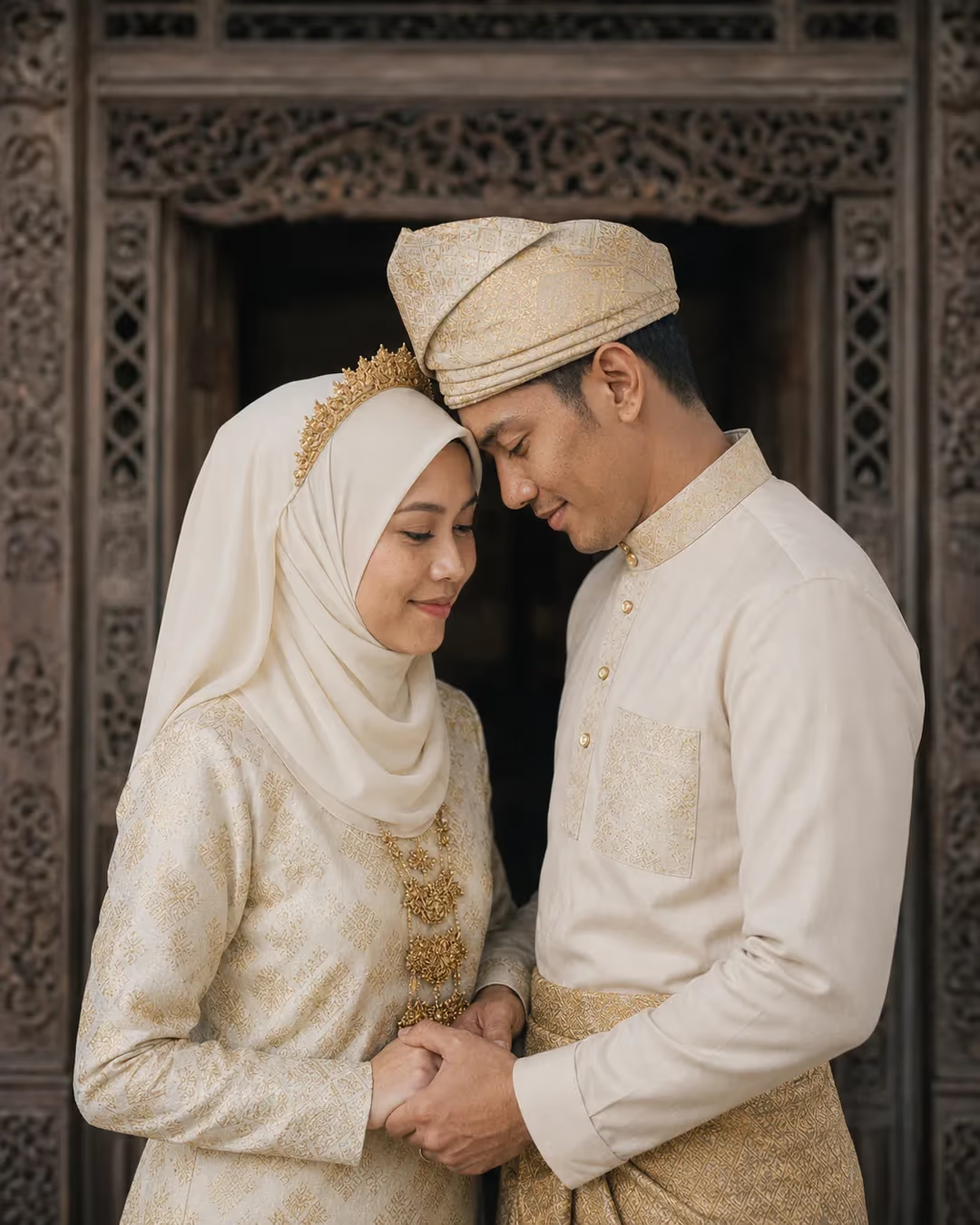
Here in Malaysia, a couple planning a wedding often wants three looks: a Western gown and suit, a Malay songket set, and for Chinese couples, the red kua. Renting all three, booking the studios, and scheduling the shoots is a real cost in money and weekends. Many couples pick one and quietly drop the rest.
AI changes that decision. From ordinary phone photos, we generated couples in full songket on a pelamin, in embroidered kua under temple lanterns, and in a white gown on a coastal cliff, without anyone fitting a single outfit. The fabric is the hard part. Songket weave and kua embroidery are exactly the kind of repeating detail AI used to mangle. Current models get them right often enough that, with curation, the delivered set holds up.
The same applies to settings. A misty paddy field at dawn, an autumn park, a rooftop at dusk. Nobody flew anywhere. For portraits, the story is similar: clean studio headshots for LinkedIn, editorial street shots, themed sets. And pet portraits turn out to be the perfect subject, because your cat was never going to sit still on a velvet throne wearing a crown anyway.
What still fails, honestly
Now the part most AI photography marketing skips.
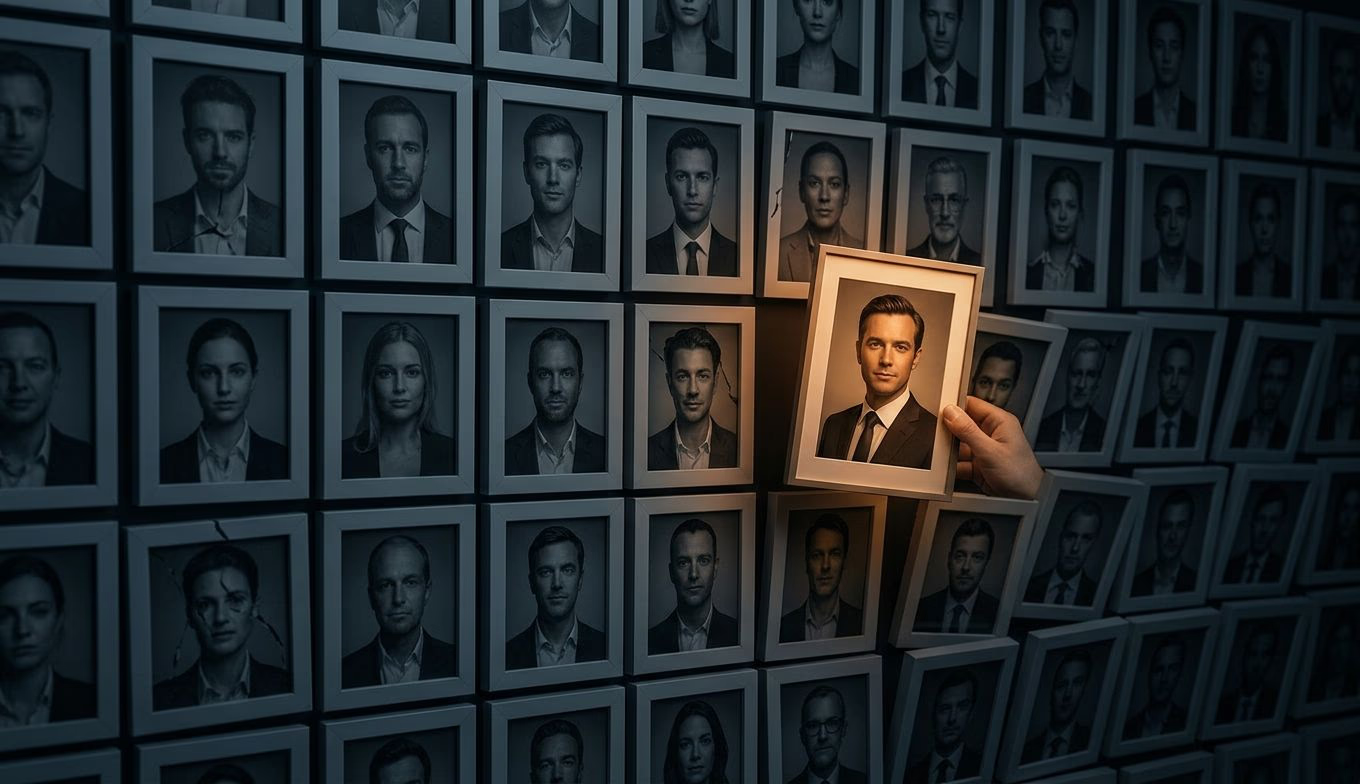
Likeness is probabilistic. For every frame that nails a person's face, several frames drift. The jaw is slightly wrong, the eyes are a touch too far apart, the smile belongs to someone else. Individually subtle, but you know your own face. This is the single biggest reason raw AI output disappoints people who try it themselves.
Hands, teeth and jewellery remain the tells. Better than the six-finger era, but these are still where generations quietly fall apart. So do repeating patterns when you zoom in: lace, weave, brick.
Couples are twice as hard. Two likenesses must hold in the same frame, plus the interaction between them. Hand-holding is where AI goes to embarrass itself.
It cannot photograph a moment. This is the honest boundary. AI can render you in a songket on a pelamin. It cannot capture your grandmother's face during the tea ceremony, because that moment has to actually happen in front of a lens. Nothing we generate replaces a real photographer on the real day, and any studio telling you otherwise is selling you something.
The work is in the throwing away
Here is the pattern we keep seeing with AI tools, whether they write code or render portraits: generation is cheap, judgment is not.
For a typical portrait set, we generate far more frames than we deliver and discard most of them. Not because the model is bad, but because "good enough at a glance" and "good enough to print and hang in your living room" are different bars. Someone has to check every hand, every hairline, every strand of embroidery, and reject the frame where the bride's ring migrated to the wrong finger.
That ratio, many generated to few delivered, is the actual product. It is the same reason AI has not replaced software teams. The typing got cheap. Knowing what to keep did not.
If you want to try it yourself
You can absolutely do this on your own, and for fun, you should. A few things we learned the hard way:
- Feed it variety. 10 to 20 photos with different angles, lighting and expressions beat 50 near-identical selfies. The model needs to learn your face, not one photo of it.
- Skip the filters. Beauty-filtered inputs teach the model a face that does not exist. The output looks like your Instagram, not like you.
- Judge like a photographer. Check hands first, then teeth, then patterns. Cover the face and see if the body still makes sense.
- Expect a low keep rate. If two frames in ten are genuinely good, that is normal. The people getting great results are not generating better, they are curating harder.
If you would rather see the ceiling of what this looks like when someone else does the throwing away, we put our sample galleries up on our new AI Photography page, alongside our motion ads under one AI media roof. Every image there started as a handful of phone photos.
The technology is real now. It is just not effortless, and the difference between those two things is where all the interesting work lives.