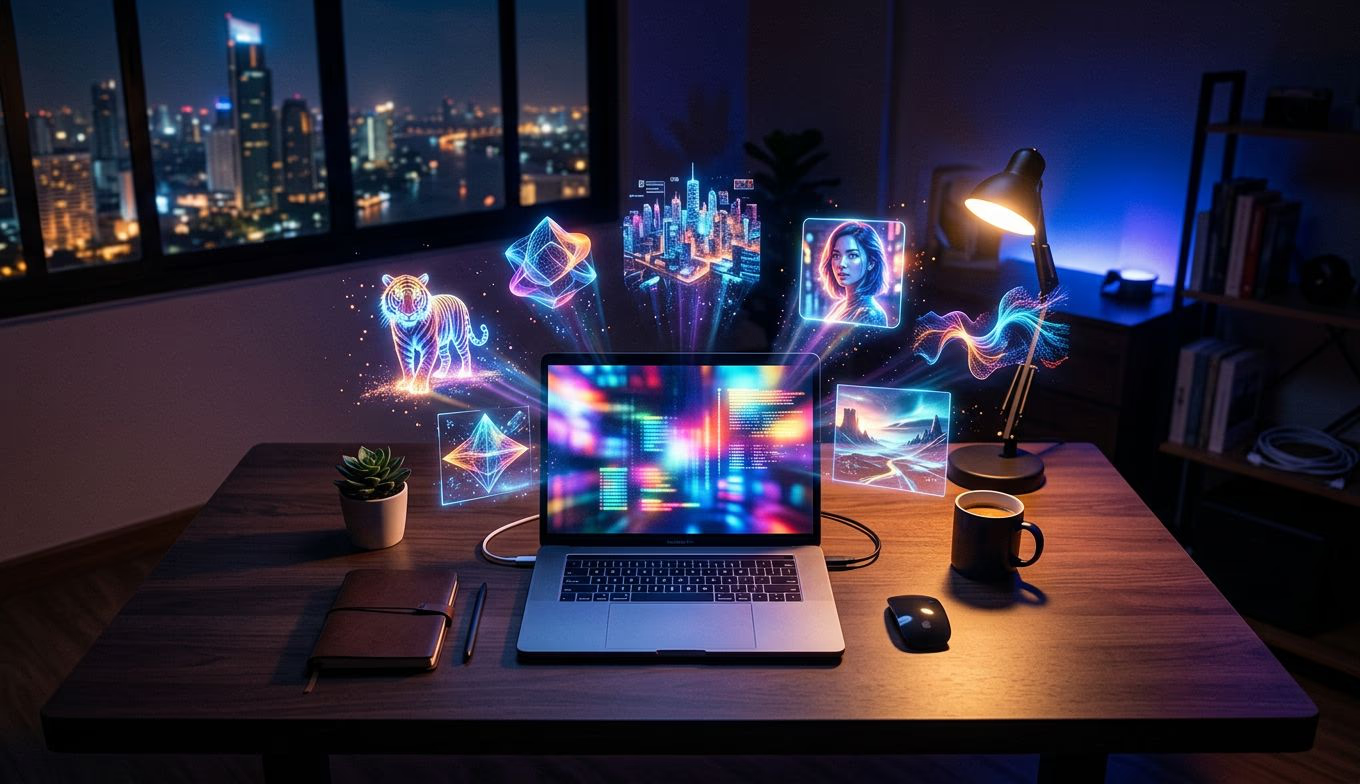
OpenAI officially launched ChatGPT Images 2.0 on 21 April 2026. We covered the leak three weeks ago. Now the product is real, it is live for all ChatGPT and Codex users, and the API model id is gpt-image-2. Broader public API access is rolling out through early May 2026, with Microsoft Foundry availability already live.
The question is no longer "is it good." It is. The question for Malaysian marketing teams and SME owners is: what should we actually use it for, and where does it still fall short?
What is ChatGPT Images 2.0?
ChatGPT Images 2.0 is OpenAI's second-generation image generation model. It replaces the GPT Image 1.5 model inside ChatGPT and ships as a new API endpoint (gpt-image-2). The headline upgrades, confirmed at launch:
- Multilingual text rendering. The old model butchered non-Latin scripts. OpenAI highlights improved rendering in Japanese, Korean, Chinese, Hindi, and Bengali. In our early tests Bahasa Malaysia and Tamil also render noticeably better than GPT Image 1.5, though OpenAI did not benchmark them officially.
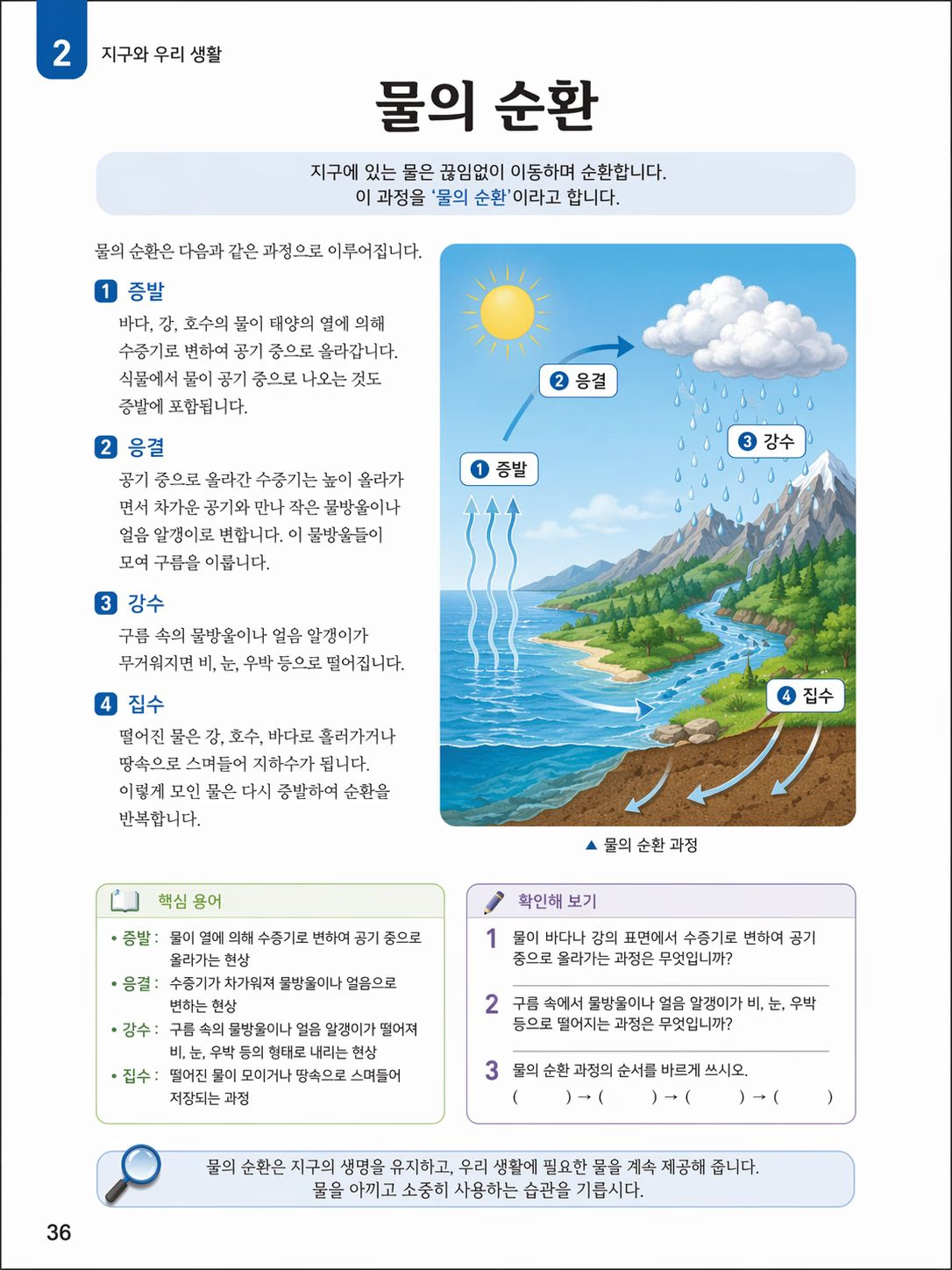 ChatGPT Images 2.0 rendering text across multiple languages and scripts. Source: OpenAI
- Infographics, slides, maps, manga. It produces full layouts, not just single subjects. Think pitch slides with real charts, not blurred squiggles.
- Web lookup. The model can pull live information from the web while generating. Ask it for "a Proton X50 interior" and it references actual product details instead of hallucinating.
- Thinking mode. For layouts with strict briefs, the model reasons before generating. Billed on extra reasoning tokens.
Pricing: what it actually costs
API pricing is tokenised, but per-image estimates from the OpenAI docs land here:
| Resolution | Quality | Cost per image (USD) | Cost per image (RM, approx) |
|---|---|---|---|
| 1024 × 1024 | High | ~$0.21 | ~RM 1.00 |
| 1024 × 1536 | High | ~$0.165 | ~RM 0.78 |
| 1024 × 1024 | Medium | ~$0.05 | ~RM 0.25 |
Thinking mode adds reasoning token cost on top. A tightly briefed infographic costs more than a loose illustration prompt. For context, GPT Image 1.5 was roughly 35-40% cheaper at 1024 × 1024, but 2.0 undercuts 1.5 at larger sizes.
ChatGPT Plus and Pro users get access inside the chat interface without per-image billing. Free users get limited generations.
What Malaysian teams should actually use it for
Our take, based on what we have tested and what we have seen clients try with earlier models: there are three clear wins, and two areas where it is not yet good enough.
Clear wins:
- Social media assets in BM, English, and Chinese. Marketing agencies pumping out daily Instagram and LinkedIn posts can now generate draft visuals with readable Malay or Chinese captions baked in. That was impossible with GPT Image 1.5. The real saving is not the render cost. It is the 30 minutes a designer spent manually placing text.
- Pitch deck and proposal visuals. Infographic rendering is the sleeper feature here. For service businesses in KL and Penang pitching to enterprise clients, producing a custom chart or diagram for each proposal used to cost a half-day of designer time. Now it is a prompt.
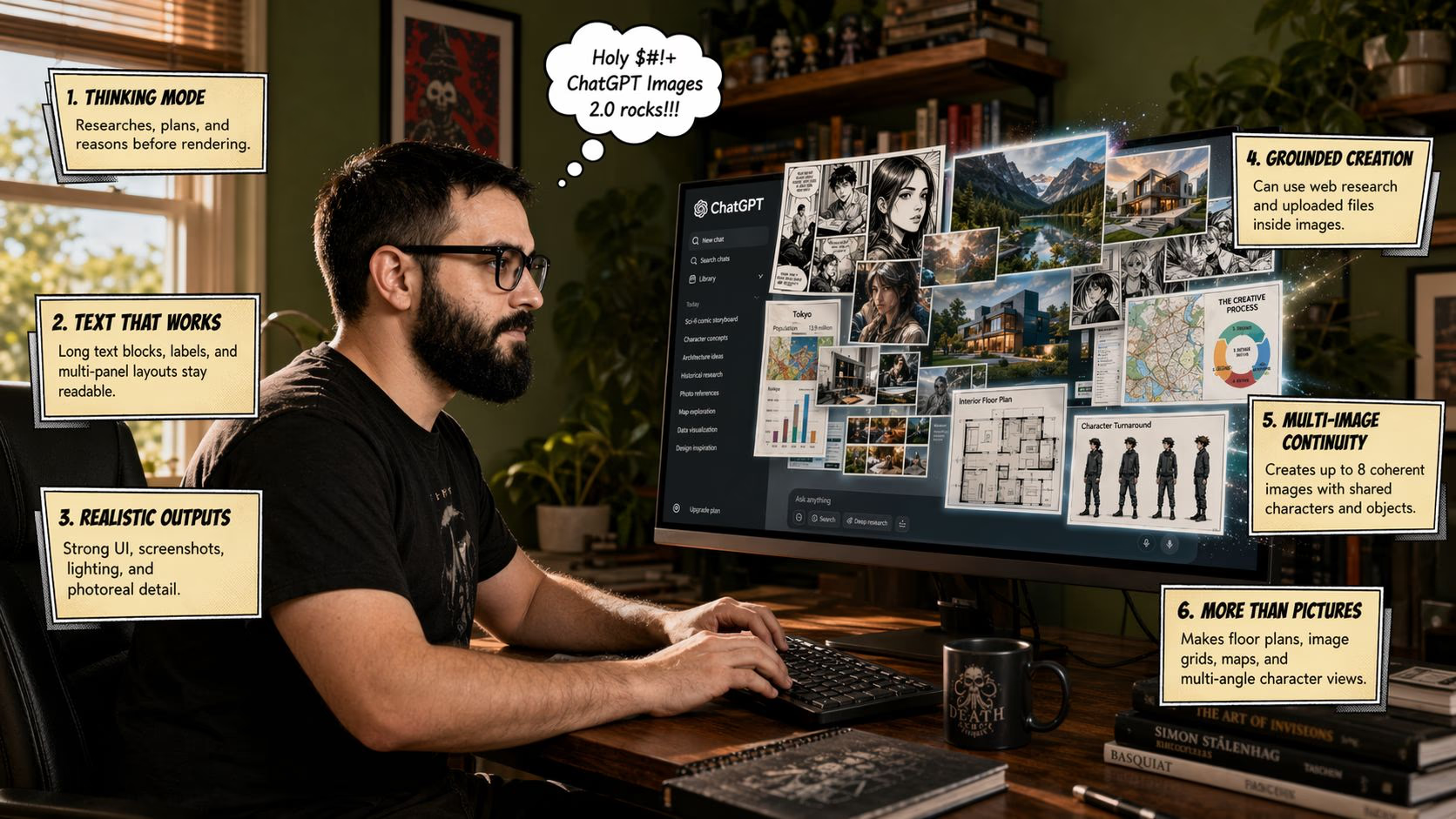 ChatGPT Images 2.0 generating a structured infographic with legible labels and layout. Source: OpenAI
3. Product mockups for e-commerce and retail. Web lookup means you can ask for "a realistic mockup of our product on a Mydin shelf" and the model gets the shelving and signage roughly right. Not perfect. Good enough for draft concepts.
ChatGPT Images 2.0 generating a structured infographic with legible labels and layout. Source: OpenAI
3. Product mockups for e-commerce and retail. Web lookup means you can ask for "a realistic mockup of our product on a Mydin shelf" and the model gets the shelving and signage roughly right. Not perfect. Good enough for draft concepts.
Where it still falls short:
- Brand identity work. Do not let AI design your logo, which comes out as pixels a printer cannot scale. Do not let it finalise your brand book. The model does not understand your positioning, your competitive context, or why your founder insists on olive green. Humans still sell judgment, not just pixels.
- Anything with regulatory risk. PDPA-compliant marketing collateral, Bank Negara disclosure requirements, LHDN invoice templates. These need a human checking every line, because the cost of an AI error is a compliance letter, not a reshoot.
How does this compare to Nano Banana 2 and Midjourney?
Google's Nano Banana 2 still leads on raw resolution (up to 4K) and price per image (roughly RM 0.20-0.70). Midjourney still leads on artistic style for creative work.
ChatGPT Images 2.0 wins on:
- Text rendering (especially non-Latin scripts)
- Instruction following for complex layouts
- Integration: it lives inside ChatGPT, so prompt-to-output is one conversation instead of five tools
For a Malaysian SME already paying for ChatGPT Plus, the honest answer is: you do not need to pick. Use Images 2.0 for anything text-heavy or multi-object. Use Nano Banana 2 when you need 4K output or bulk cheap generation. Use Midjourney when you want art, not utility.
Our honest take
We build software, not marketing collateral. But we talk to enough Malaysian SME owners to see the pattern: most businesses are not under-designed. They are under-shipped. They have a logo, they have a brand, they just never get around to producing the weekly social content or the monthly proposal visual because the designer is expensive and the freelancer is flaky.
ChatGPT Images 2.0 does not fix the flaky freelancer problem. It lowers the cost of "just ship something" from RM 150 per visual to roughly RM 1 plus 15 minutes of prompt iteration. That changes the math on "should we even bother posting this week."
The downside is the flood. When every business in Bukit Bintang can ship a slick-looking Instagram carousel for free, slick-looking stops being a moat. The brands that win in the next two years will be the ones with actual taste and actual point of view, because polish is now table stakes.
If you are a marketing lead, this is good news. You stop spending budget on producing assets and start spending it on the thinking behind them.
What about custom software use cases?
A few clients have already asked us about embedding gpt-image-2 in their own apps: e-commerce stores that want auto-generated product backgrounds, property portals that want staged room renders, online learning platforms that want illustrated quiz visuals. The API is straightforward, pricing is predictable, and rate limits are higher than the previous model.
What matters for integration: caching, moderation, and fallback. Cache generated images aggressively (users regenerate the same prompts). Run outputs through OpenAI's moderation endpoint if users control the prompt. Have a fallback to the previous model or a cheaper provider when the API is down.
If you are building something where image generation is a core feature, talk to us. We have shipped AI-powered features for Malaysian SaaS and e-commerce clients and can help you avoid the expensive mistakes.
References
- Introducing ChatGPT Images 2.0 OpenAI launch post, 21 April 2026
- GPT Image 2 Model: OpenAI API official model documentation
- OpenAI API Pricing official pricing reference
- ChatGPT's new Images 2.0 model is surprisingly good at generating text TechCrunch coverage
- OpenAI Beefs Up ChatGPT's Image Generation Model WIRED review
- OpenAI's ChatGPT Images 2.0 is here VentureBeat launch analysis
- Introducing OpenAI's GPT-image-2 in Microsoft Foundry Azure availability
Pricing figures are estimates in USD based on OpenAI documentation at time of publication and converted to RM at approximately 4.7 MYR/USD. Actual costs vary with prompt complexity and thinking mode usage.