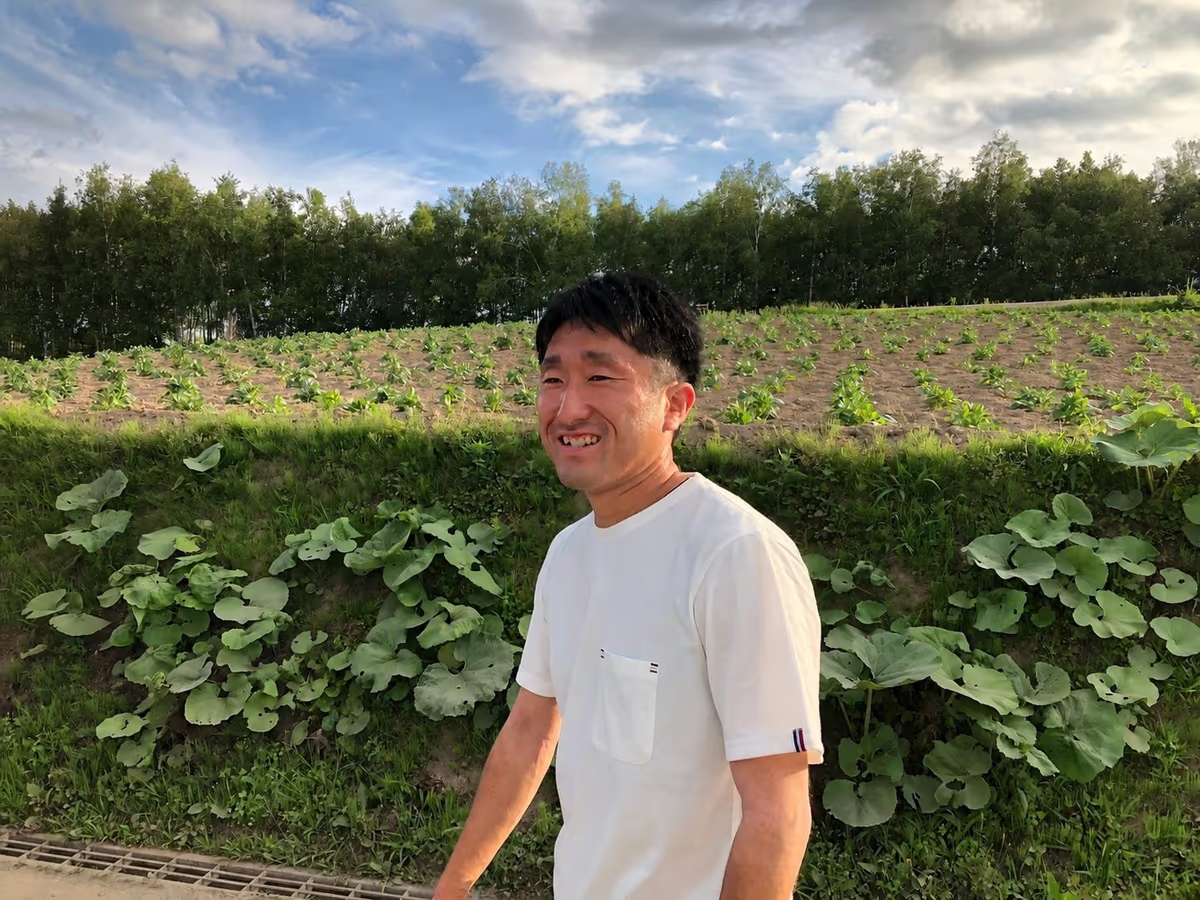
"It feels like having a world-class engineer next to me at all times."
That is how Tomiyasu Hiroki describes ChatGPT and Codex. He is not a startup founder in Tokyo. He is a farmer in Hokkaido who grows broccoli, pumpkin, leeks, and soybeans across about 100 hectares. He grew up near Tokyo, worked as a civil servant, and never studied farming or computer science. He learned both by doing.
His story, shared through the ChatGPT Pro Community, is the clearest proof we have seen of what AI actually does for people who cannot code. And the lesson for non-technical founders is not the one the hype usually sells.
The honest version: AI for non-technical founders means you can now build prototypes and internal tools without hiring a developer, but you still own every real decision about what to build and how to keep it safe.
What one farmer built without an engineer
Modern farming at this scale is brutal: heavy work, complex operations, and almost no one to hire. So Tomiyasu started automating the work himself. Traditional farm automation needs expensive proprietary machines and specialist engineers. He says AI changed that math.
Here is some of what he built, each from a plain-language prompt:
- Crop disease checks. He photographed black spots on harvested broccoli and asked ChatGPT whether it was a disease and how to handle it.
- Satellite field monitoring. He set up a system that pulls satellite data for his own plots and tracks vegetation health, then layers it onto a field map.
- A remote greenhouse controller. Using Codex, he wired an ESP32 board, a motor driver, Cloudflare Workers, and a LINE chat bot so he can open and close greenhouse vents from his phone.
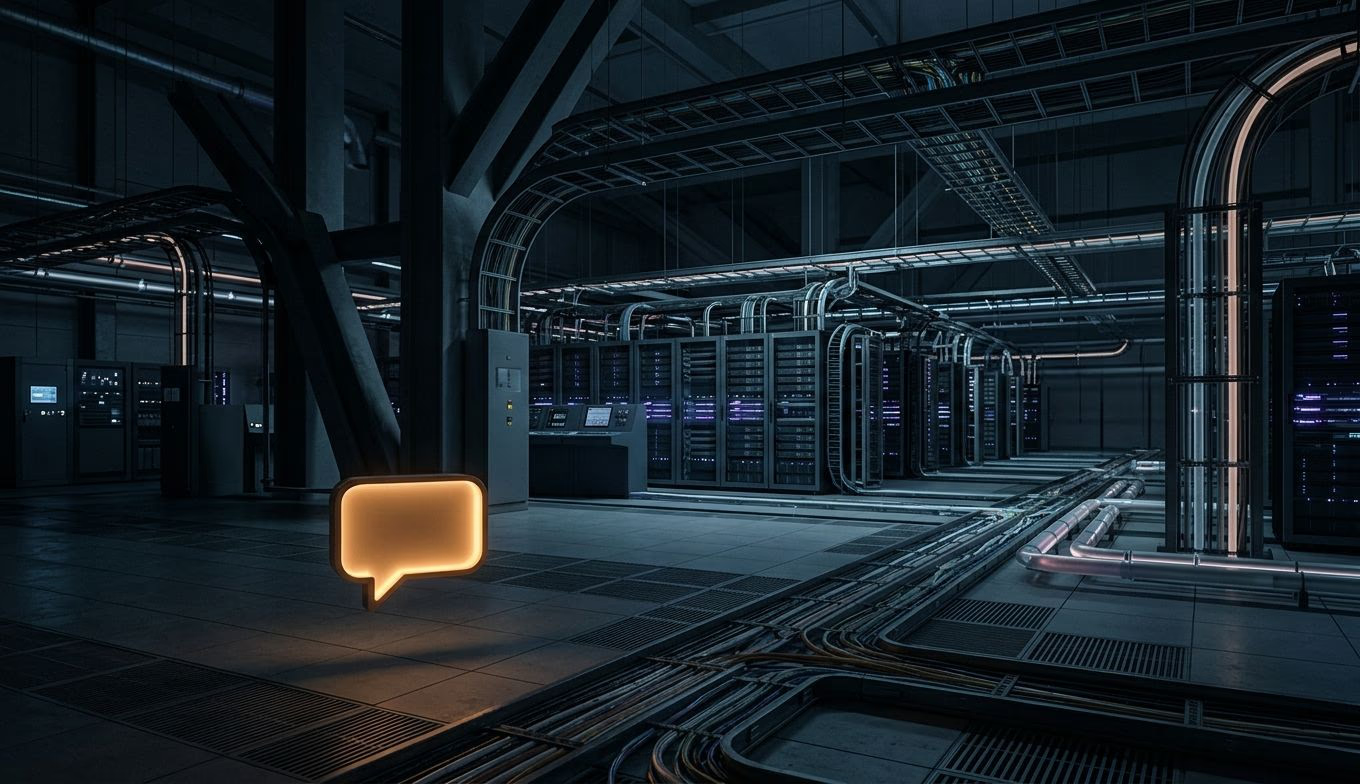
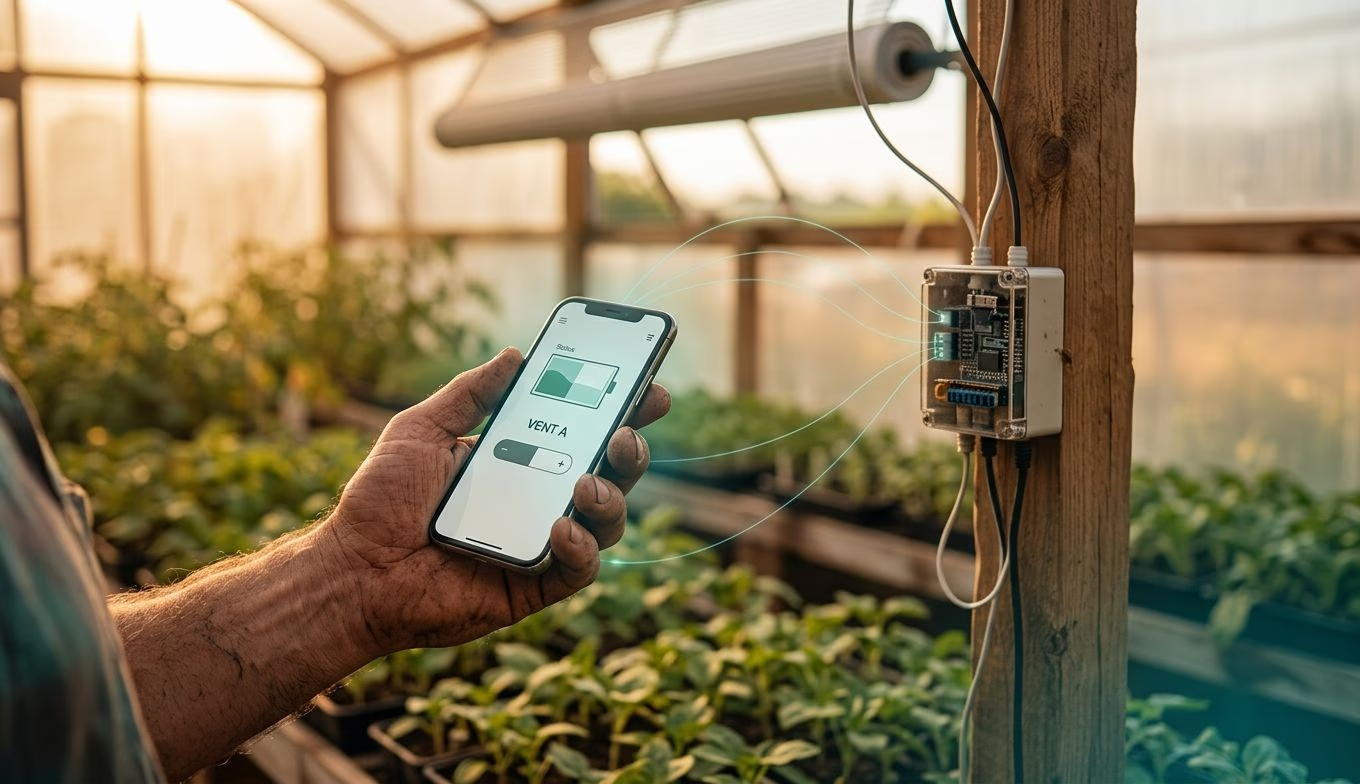 A simple phone, a cheap microcontroller, and AI-written code add up to a remote greenhouse vent. Concept illustration by Gotchaa Lab.
- A farm chat-ops bot. The team's everyday group chat can now check greenhouse temperatures, run the vents, and pull the work schedule.
- Data mining from chat logs. He asked Codex to read the group chat history and count exactly how many broccoli trays had been sown.
He also used ChatGPT to understand RTK-GPS tractor steering before buying anything, and realised he could build his own setup for a few hundred thousand yen instead of paying for a proprietary system.
The part the hype skips
Read that list again and notice what AI did not do. It did not decide that a greenhouse controller was worth building. It did not choose the hardware. It did not judge whether a 24V motor wired to a cloud function was safe to leave running. Tomiyasu did all of that.
This is the honest shape of "AI for non-technical founders." The model removes the gatekeeper, the person you used to need just to translate an idea into working code. It does not remove the judgment. Someone still has to know what problem is worth solving, what good looks like, and what happens when it breaks at 2am during harvest.
We see the same pattern in our own work. We use Cursor, Claude, and Codex every day, and they make our team faster. But the value we deliver to clients was never typing. It is deciding what to build, how to structure it so it survives growth, and how to keep customer data safe. That work got more important, not less. If you want a longer take on this shift, we wrote about the rise of the AI system developer and the security traps of vibe coding.
What this means for founders here
If you run a small business or a startup in Malaysia, the takeaway is practical and a little freeing. You no longer need to wait for a developer to test an idea. You can build the internal tool, the dashboard, or the automation that proves the concept this week, the way Tomiyasu did between harvests.
But draw a clear line. A weekend prototype that controls your own greenhouse is one thing. A system that holds customer records, takes payments, or has to meet PDPA rules is another. That is where the failure modes get expensive: a leaked database, a payment bug, an integration that quietly drops orders. AI will happily write code for all of it without telling you what it got wrong.
Our honest take: let AI lower the cost of trying things. Use it to learn, to prototype, to automate the boring parts. Then bring in real engineering judgment before anything has to run reliably, scale, or be accountable to a customer or a regulator. The farmer understood this instinctively. He used AI to learn RTK-GPS before spending a cent, not to skip understanding it.
The barrier to building software just dropped for everyone. The need for someone who knows what is worth building, and how to make it safe, did not.
Thinking about where AI fits in your business, and where it does not? Let's chat. We will give you an honest read, no sales pitch. You can also see how we approach AI solutions for Malaysian teams.