
You know the list. Post something twice a week. Follow up the leads that went quiet in May. Chase the invoices at 45 days. Reply to enquiries the same day, not Thursday. Nothing on that list is hard. You just have three people, and all three are already full.
A custom AI agent is software given one job. You write down what the job is, hand it the facts it needs about your business, and it does that job or drafts it, then passes anything risky back to you. Chasing the invoices at 45 days is one job. Replying to enquiries the same day is another. Custom AI agents in Malaysia work the same way: one worker per job, never one assistant doing all of it, and a person still holding the decisions. That is the only shape we have seen survive a real week.
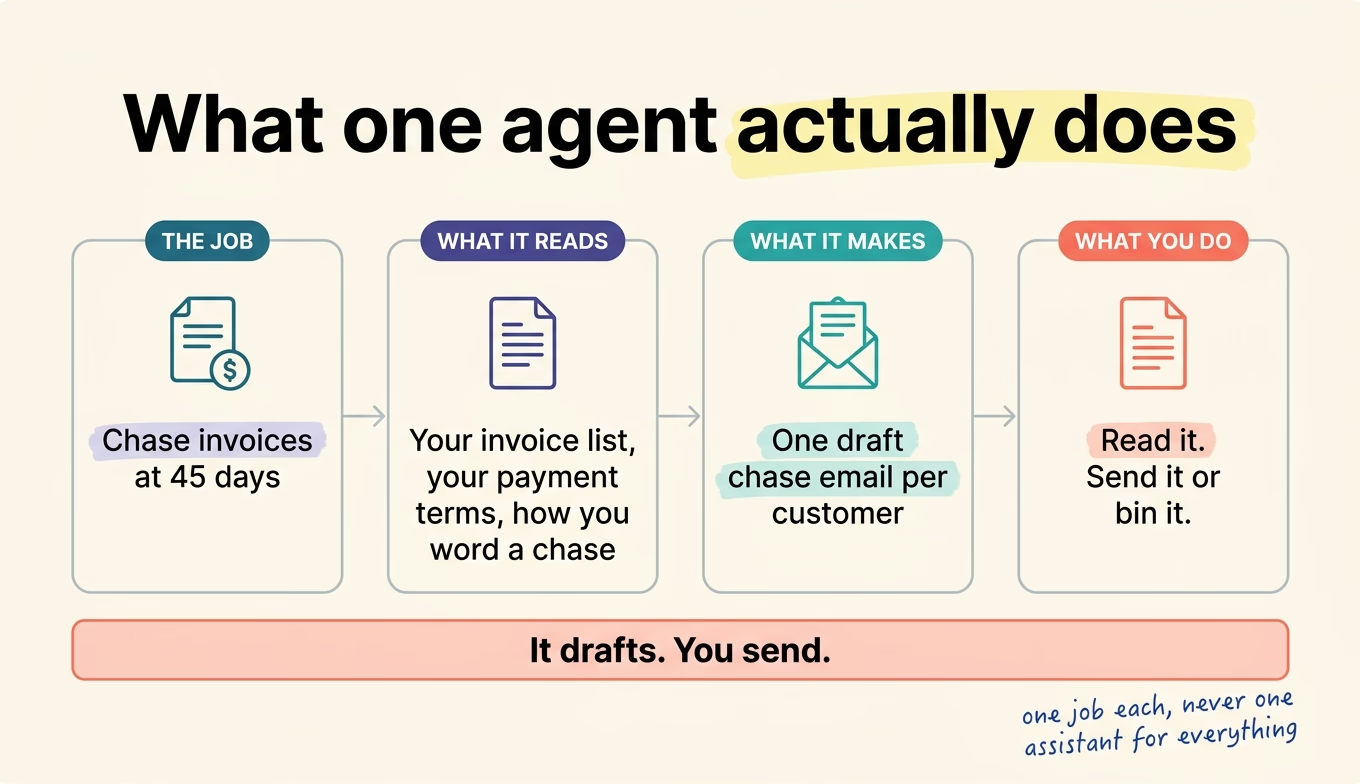 One agent, one job, worked through end to end.
So the list is not a knowledge problem. It is a capacity problem. That distinction decides whether AI helps or becomes another tab nobody opens.
Can a Malaysian SME build custom AI agents itself?
Yes, and the blueprint is public. Machina published a walkthrough on X in July for running a one-person business with five agents, one each for content, projects, outreach, finance and ads. It is vendor-sponsored, so read the tool pick with that in mind. The design ideas hold up regardless.
Five ideas carry the whole thing. Take the invoice chase.
One agent, one job. The agent that chases invoices at 45 days does not also write your Facebook posts. One assistant with one enormous brief is what makes handmade setups fall over.
The written facts are the asset. Plain files it can read: your payment terms, who handles accounts at each customer, and how hard you push a customer of ten years against one of ten weeks. Skip this and every chase letter comes out generic, so you rewrite it by hand anyway.
Keep a list of corrections. The first draft leads with the word overdue and you decide that is too blunt for your older accounts. You write one line: for customers longer than two years, state the amount and the date, never the word overdue. Written down, it holds. Kept in your head, you fix it again every Friday.
Set permissions by how much damage a mistake does. Drafting the chase is safe. Sending it is not, because a customer chased wrongly rings you, not the agent.
A spend cap on day one. Set it before the first brief, not after the first bill.
The gate is the part that decides whether this is safe
Four of those five are about doing the work well. Only the one about permissions is about damage, and it is the one people add last.
An agent that drafts badly wastes an hour. An agent that sends badly costs you a customer, and you hear about it from the customer. So the gate is the first thing to design, not something you add later.
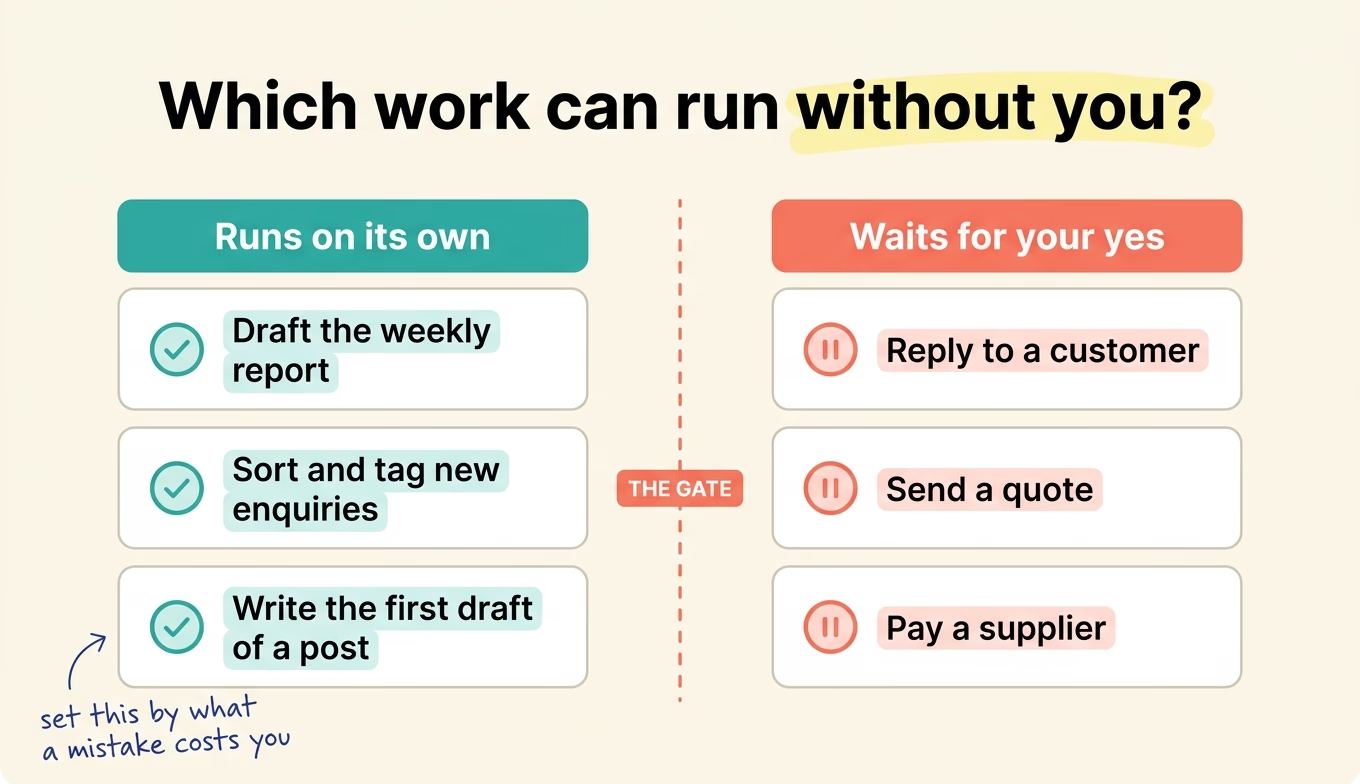 Find your own work on this chart. The cheap-to-fix side runs. The expensive side waits.
Most Malaysian AI agent pages sell autonomy and skip who approves what. Ask any vendor where their gate sits, and what happens the day an agent is confidently wrong. If they cannot answer plainly, they have not run one long enough to find out.
Why the DIY build stalls in a three-person team
Count the work in that blueprint. Write the facts down for one job. Connect the software it runs on. Brief the job properly, because a vague brief gets you work that is wrong and sounds certain. Then read every output and correct it, with a rule attached, for weeks.
That last part is what people underestimate, and that is one job. The blueprint has five.
 The build is the small part. The stack is the weeks of reading the output and writing down each correction.
If you have the hours, build it yourself. The blueprint is enough. If you are reading about it at 11pm because that is the only quiet hour you get, you already know how it ends. It ends where the automation-agency pitch ends, except you paid in weekends.
What custom AI agents look like when someone designs them for you
Most enquiries arrive in one sentence: we want to do all of this and we cannot.
So that is where we start, not with a product. Which jobs matter this year and which are noise. What your written business facts have to cover. Where the human gate goes. Then we build it.
Some of it is agents. Some of it is one boring integration that stops staff retyping the same order into two systems, which is the answer more often than AI vendors admit. Either way, hand it one department, not the org chart.
Two things change when it works. The jobs on the list get done on the day they are due, and one designed system costs less to build than five pieces commissioned separately, because the plumbing gets built once. We will not put a saving figure on your business before we have seen it. Our cost guide has what the build costs here.
What does not change: someone still reviews the output and owns the customer.
Start with one page, not one system
Pick the one job where you lose the most hours. Write one page on it:
- What the job actually is, step by step.
- What "done" looks like, specific enough that someone else could judge it.
- What must never happen without you seeing it.
That page is a brief. It works whether you build it yourself, hand it to a freelancer, or send it to us. In our experience the trouble starts right here, before any software exists, because nobody writes it.
Written your one page? Send it to us and we will tell you which job to start with, and which ones to leave alone. No pitch. Our AI development work covers the build if you want it.