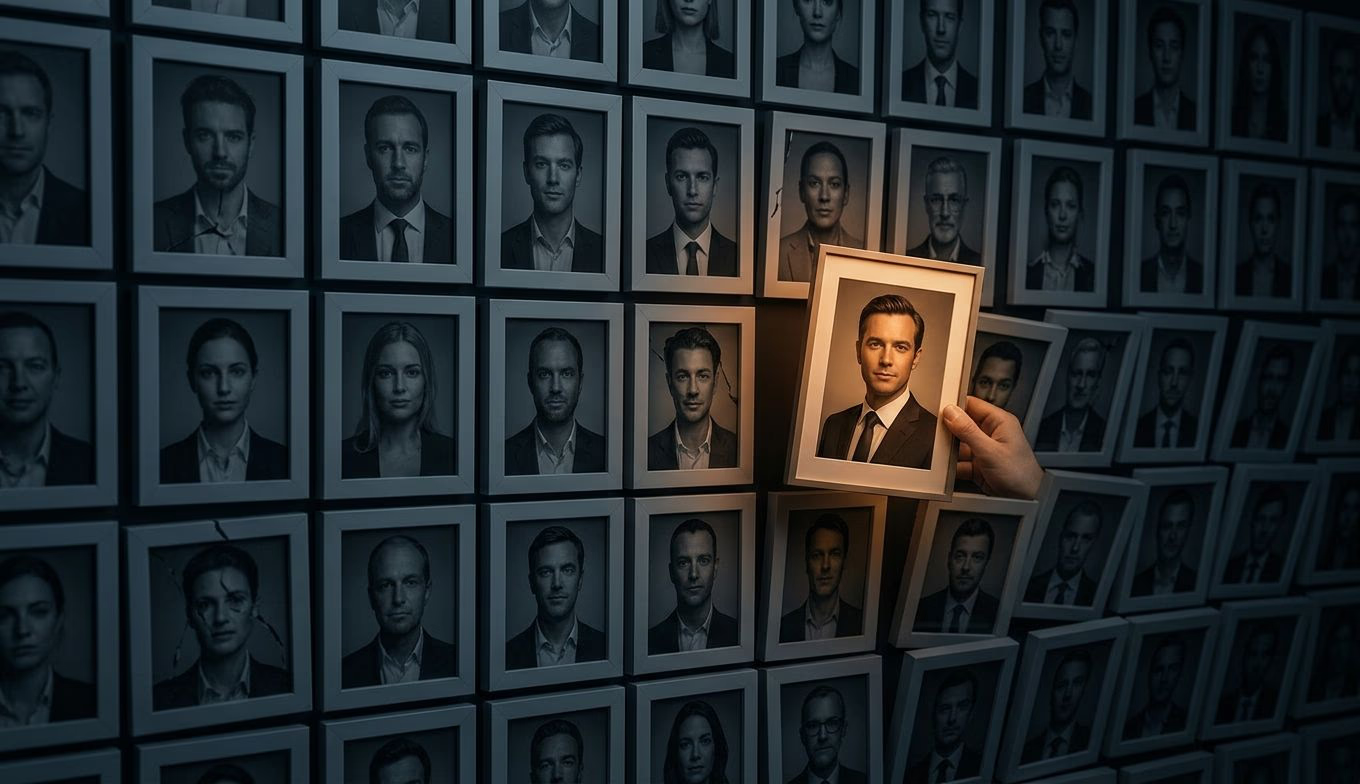
A restaurant in Malaysia ran an AI ad built on a faked image of footballer Erling Haaland to promote its food. Malaysians roasted it. The thread on r/malaysia pulled over a thousand upvotes and a hundred-plus comments, and the comments were not kind.
The next day the government unveiled "Tuah," the official mascot for the 2027 SEA Games. Netizens took one look at the humanoid robot, decided it looked AI-generated, and asked why the organisers skipped homegrown studios like Monsta and Les' Copaque. The Youth and Sports Ministry has not confirmed whether AI was used. The design still got dragged.
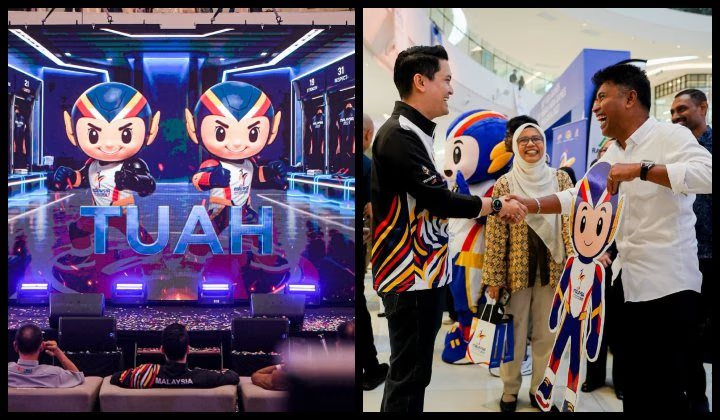 "Tuah," the official 2027 SEA Games mascot. Malaysians questioned whether it was AI-made and asked why local studios were passed over. Source: The Rakyat Post
Here is the uncomfortable part for a company like ours. Gotchaa Lab sells AI photography and AI motion ads. So we should probably be defending AI here. We are not going to. The backlash is earned. Most AI ads you see really are slop.
Why Malaysians hate AI ads
The anger is not really about AI. It is about laziness.
An "AI ad" today usually means someone typed a prompt, took the first image the model spat out, and posted it. No second look. No editing. The melted hand stays in. The fake Haaland stays in. That is what people are reacting to. Not the technology, the fact that nobody bothered to check.
This is not a Malaysian problem, it is just landing here now. Globally, brands as big as McDonald's and Valentino have pulled AI campaigns after customers said the work felt flat and fake. Other brands, like Aerie and Equinox, ran ads in early 2026 that openly bragged about not using AI. When "no AI" becomes a selling point, you know the slop got bad enough to move the market.
So Malaysians are right to roast it. An ad nobody checked is an ad that says: we did not think you were worth the effort.
What actually makes an AI ad slop
Slop is not a mystery. It has tells. Learn these four and you will spot it in a second, whether it is your competitor's ad or your own draft.
- The hands, faces and fabric fall apart up close. Six fingers, a melted ear, a logo that turns to soup when you zoom in. AI still fumbles the fine detail. Slop is what happens when nobody zoomed in.
- A fake or borrowed face. The Haaland restaurant is the textbook case. Sticking a celebrity, or anyone's face, onto your ad without permission is not clever. It is a lawsuit and a roasting waiting to happen.
- A promise the product cannot keep. AI will happily render a burger twice the size of the one you actually serve, or a spotless showroom you do not have. When the real thing shows up, the customer feels lied to.
- The generic look. A shiny image that could belong to any business and therefore belongs to none. No real product, no real place, nothing that says you. It reads as filler because it is.
Notice that only the first tell is about the AI being imperfect. The other three are human decisions: to fake a face, to overpromise, to not bother making it yours. The machine did not do those. A person did, or rather, a person failed to stop them.
What separates AI that sells from slop
We wrote a post last week about AI photography, and the lesson is the same one here. Generation is cheap, judgment is the product. It holds for ads even more than for portraits.
Here is how the work actually goes when it is done right. You generate far more than you need, ten or twenty versions of a shot, and you throw most of them away. Then a human does a pass on what survives: check every hand, kill any borrowed face, make sure the ad promises only what the product delivers, and swap in the real product where the model invented a fake one. What ships is the two frames out of twenty that hold up under a zoom.
That ratio, many made and few kept, is the entire difference between an ad that sells and slop that gets roasted. The slop skips the throwing-away step. It ships the first thing the model made.
Our honest take: AI has not made good advertising easy. It has made bad advertising fast. The tool that lets a careful shop deliver a polished ad in a day is the same tool that lets a careless one publish a fake Haaland by lunch. The tool is neutral. The judgment is not, and judgment is the thing you are actually paying for.
What this means for a Malaysian business
If you are tempted to make your own AI ads, good, you should try. Just judge your own drafts like a stranger will. Zoom in on the hands. Cover the slogan and ask if the image still feels like your business. If it could be anyone's, it is not ready.
If you are paying someone to make AI creative for you, judge them by their reject pile, not their software. Ask a simple question: how many versions did you generate to get the ones you are showing me? A vendor who generated three and picked one is selling you slop with a markup. A vendor who generated forty and killed thirty-eight is selling you judgment. Ask to see the real product in the frame, not a prettier invention of it.
The Malaysians roasting AI ads are not anti-AI. They are anti-lazy. Meet that bar, curate hard and check the details, and AI ads stop being a liability and start doing the one job an ad has: making someone believe you.
At Gotchaa Lab, AI photography and AI motion ads sit under one AI media roof, and the throwing-away is built into how we work. If you are weighing whether AI creative is right for your business, talk to us and we will give you an honest read, slop and all.
References
- Local restaurant uses AI-generated image of Haaland to promote food (r/malaysia)
- AI's biggest World Cup star? It's a fake Erling Haaland (Euronews)
- "Tuah" Or Too Artificial? 2027 SEA Games Mascot Fuels AI Debate (The Rakyat Post)
- Why Malaysians are not buying into SEA Games mascot, Tuah (Sinar Daily)
- AI Ads Trigger Backlash: Here's What Research Says Leaders Can Do (Forbes)
- With AI backlash building, marketers reconsider their approach (Digiday)