In mid July a post on X broke Claude down into 42 skills and arranged them like a company org chart. Developers, marketing, finance, legal, every department with its own stack of real, installable tools. A widely reposted version passed 790,000 views. The implied promise was hard to miss: here is your whole company, no staff required. Which lands on the question plenty of owners are now asking out loud. Can AI run a business?
No, not end to end, and not this year. It can hold one department's repetitive work, reliably, under a named human owner. That is the honest version of the org chart, and it is still a big deal.
What the 42-skill org chart actually is
A skill is a folder of written instructions the AI loads only when a task calls for it. Anthropic describes them as modular, file system based capabilities and publishes a set for everyday document work. Community collections go much further: one public repository lists 166 skills sorted into 14 corporate departments, from executive leadership to procurement.
So the chart is real. It is also not a company. Every box on it sits idle until someone triggers it, checks the output, and carries the consequences. An org chart made of skills has nobody in it.
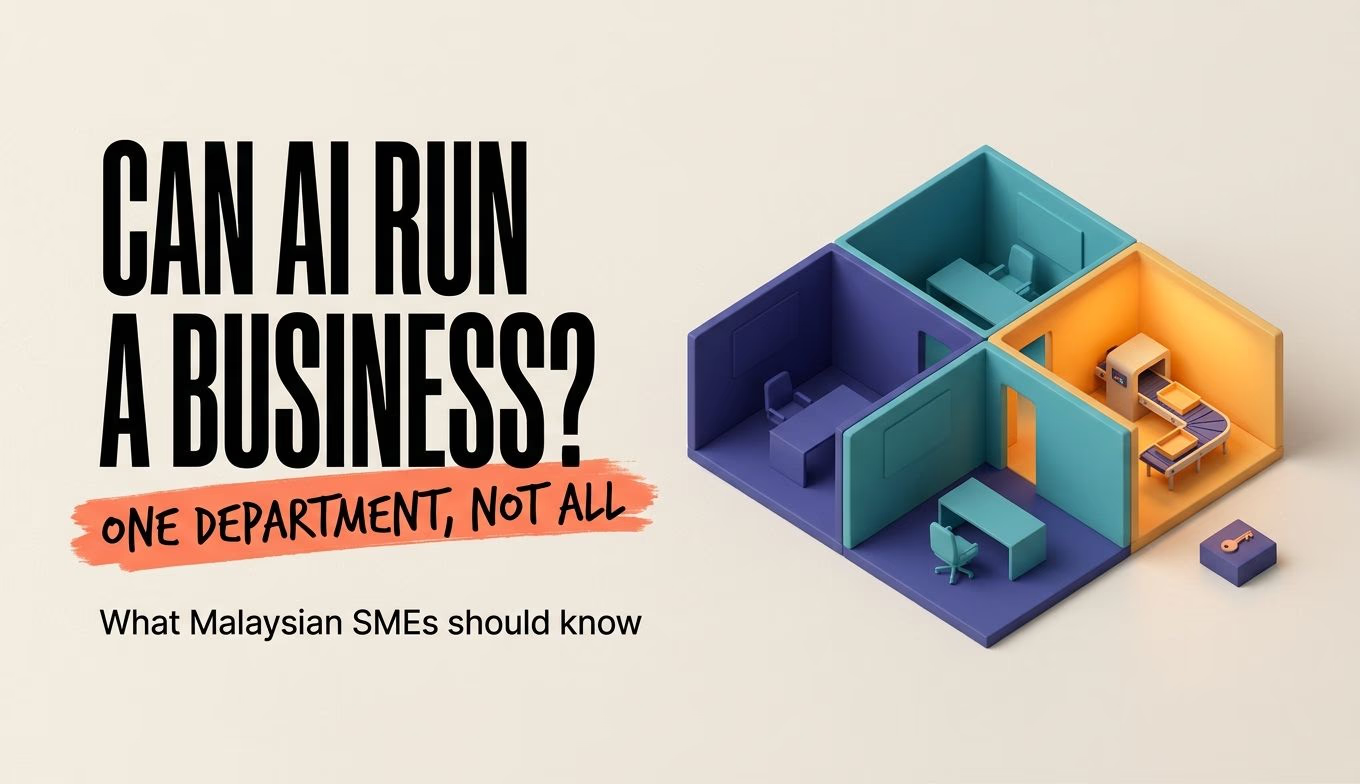
Can AI run a business department by department?
That is the more useful question. Here is the split we see in client projects, not the one the thread promised.
| Department | What AI can hold today | What still needs a human owner |
|---|---|---|
| Marketing and content | First drafts, repurposing, research briefs | Any claim that must be true, and brand judgement |
| Sales admin | Lead research, CRM notes, follow-up drafts | The price, the promise, the relationship |
| Finance and admin | Invoice data entry, reconciliation prep, expense sorting | Anything filed to LHDN, and every number you sign |
| Customer support | The same five questions, ticket routing, draft replies | Complaints, refunds, anything a screenshot could make viral |
| Operations and reporting | Assembling the weekly report, tidying data | The decision the report leads to |
None of that right column is beyond what the models can produce. It just needs somebody accountable, and a smarter model does not fix that.
Which department should a Malaysian SME hand over first?
Score every candidate on two questions. How many times a week does this task repeat? And what happens when the output is wrong?
You want high repetition and low blast radius. A weekly sales report assembled from three spreadsheets repeats 52 times a year and fails quietly, costing you an hour and an apology. An e-invoice submitted to MyInvois with the wrong figure fails loudly and costs money. Give the AI the first kind of job and make it earn the second. Switch on all seven departments at once and you end up with 42 installed skills and none in daily use.
 Xero's AI readiness study, published 18 November 2025, covered 1,033 Malaysian MSMEs. Source: Malaysia SME
The Malaysian numbers back this up. Xero's November 2025 study of 1,033 local MSMEs found 81% had already implemented AI somewhere, 82% said they need more education to use it confidently, and 30% of users had no governance policy at all. Owners here have not refused to try AI. Most have tried it thinly, without deciding who owns the output. And governance is not just paperwork: putting customer records into a personal chatbot account is a PDPA problem, not a preference.
Our take: can AI run a business without you in 2026?
The org chart works as a sketch and fails as a plan. We use these tools daily and they have genuinely changed how fast we ship the AI systems we build for clients, but the wins come from one narrow job done properly, then the next. Never from a wall of departments switched on in a weekend.
For concrete first pilots with costs attached, see our five ways an SME can put an AI agent to work. If somebody is pitching you the whole org chart as a service, read the AI automation agency hype first.
If you do one thing this month, draw your own org chart on a single page and circle the most repetitive task nobody would panic about if it came out wrong once. Give that task to a tool for four weeks with one person's name against it, then count the hours saved before you buy anything else.
Thinking about which part of your business is actually ready for this? Let's chat. We will give you an honest read, including the parts we would tell you not to automate yet.
This article is general information and does not constitute legal advice. Check your own PDPA and e-invoicing obligations with a qualified adviser.