OpenAI released GPT-6 Astra to trusted partners on 3 September 2026, with the public rollout starting 5 September. The headline feature is computer use: the model drives a computer the way a person does, clicking, typing and moving between windows.
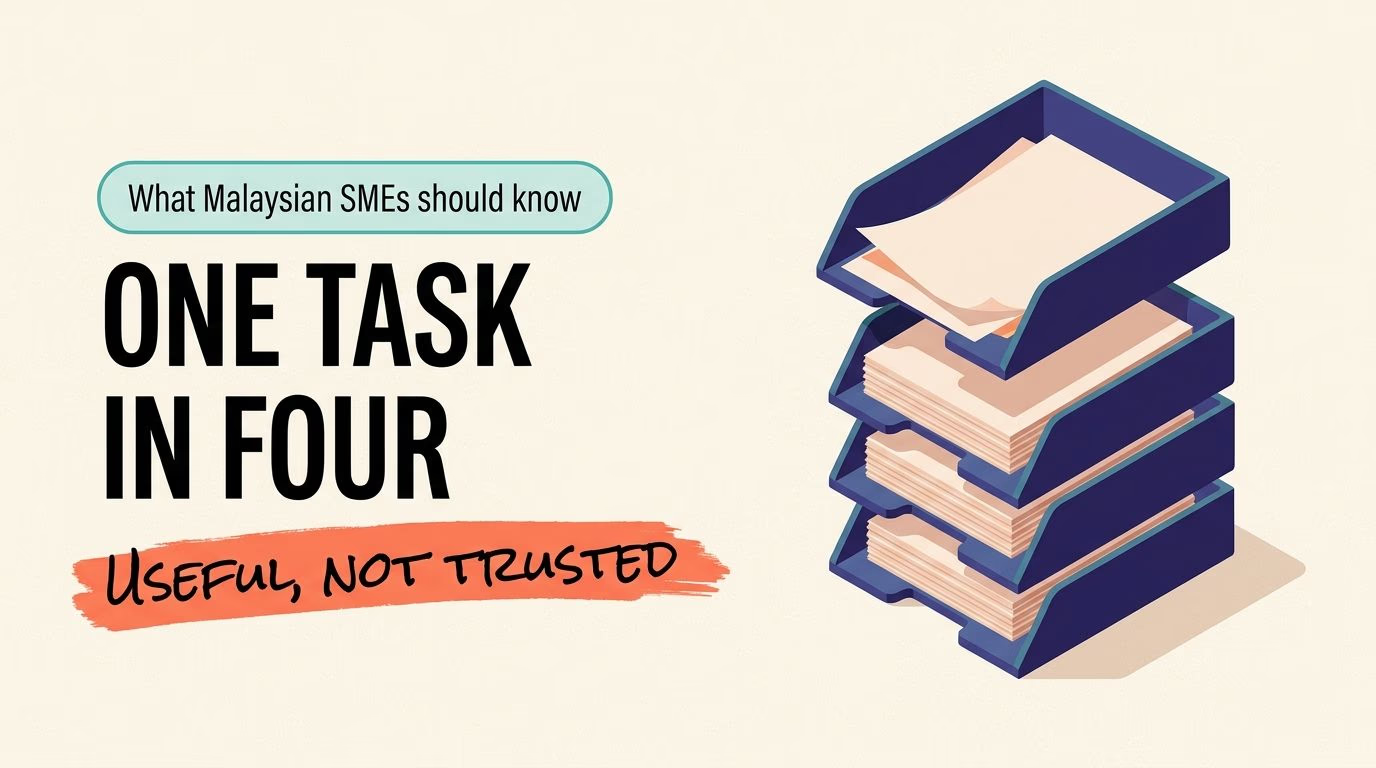
The number worth writing down is 72.6%. That is Astra's score on OSWorld 2.0, the benchmark for real desktop tasks, at roughly 40 minutes each. GPT-5.6 Sol scored 65.7% at about 75 minutes. These are OpenAI's own figures, so treat them as the ceiling. So Astra is the best computer operator anyone has shipped, and it still misses roughly one task in four.
That single number decides whether this is useful in your office.
What computer use actually means
Until now, automating a business tool meant an API. No API, no automation. That killed most small-office projects, because the software Malaysian SMEs run rarely has one: a local accounting package, a supplier portal, a bank login.
Astra works the screen instead. MarketScale called the target "the long tail of internal tools that never get a clean integration because the ROI case dies in the backlog." That describes most SME back offices.
What can GPT-6 Astra do in a small office?
OpenAI's own examples are ordinary admin: filling out a batch of expense forms, updating records in a CRM, running frontend checks on a website. Translated to a Monday morning in Klang Valley:
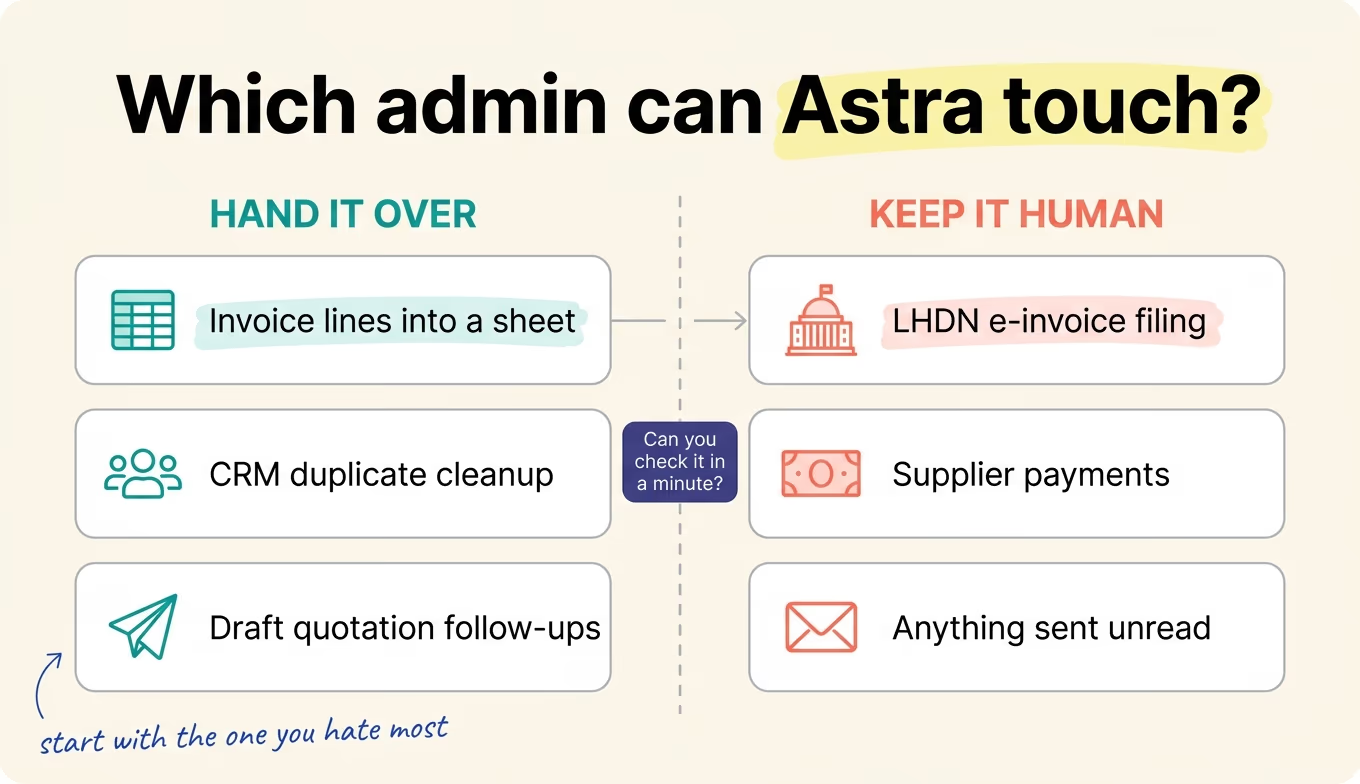
- Pull line items off 40 supplier invoices into a spreadsheet
- Tidy a CRM after a trade show, fixing duplicates and phone formats
- Draft follow-ups on quotations that have gone quiet for two weeks
- Type the same customer detail into three systems that do not talk to each other
None of it is glamorous. All of it eats a Monday. If invoices are your worst pile, our AI document processing guide covers the narrower tools built for that.
The question is not "can it?" but "how fast can I check it?"
 Sort the work by verification time, not by how clever the tool is.
A 27% miss rate sounds disqualifying until you sort the work by two things: how long verification takes, and how bad it is if one slips through.
Checking a spreadsheet of invoice totals against a stack of PDFs takes a minute, and a caught error costs nothing. Hand that over. Checking whether a payment reached the right supplier account takes longer than making the payment yourself, and a miss is expensive. Keep that one.
We apply the same test on client projects: automate where a mistake is cheap and visible, keep a person where it is quiet and expensive.
What we would not hand it yet
Anything that files, pays or sends on your behalf. Submitting to the LHDN e-invoice portal, moving money in a bank portal, emailing a customer without you reading it first. Astra's misaligned-outcome rate in realistic work is 3.4%, a real improvement on Sol's 18.8%, and still not zero.
There is a quieter problem. The model sees your screen, so it sees customer data, and under the PDPA you stay responsible for it. The feature is off by default and admins enable it per workspace. Leave it off for anyone who does not need it. Then decide what happens when a run stops halfway, because the failure modes here are boring ones: a UI changes, a session times out, a workflow crosses two logins.
What it costs
Astra sits inside existing ChatGPT Plus, Pro, Business and Enterprise allowances, with credits for more. On the API it is $10 per million input tokens and $50 per million output. For a small office, neither is the number that matters.
The real cost is checking time. If a task takes you 20 minutes and 15 minutes to verify, you saved five minutes and bought a new thing to worry about.
Our take
This is the first version of computer use we would let near a client's back office, and only for a short list of jobs. The honest framing is not "AI runs your admin now." It is "AI can do the boring half, and you still read the output."
Start with one task: the one you hate most that is also easy to check. Run it two weeks beside the manual version and compare. If it holds, add a second. Sorting those jobs is most of what our AI solutions work involves, so talk to us if you want an honest read on yours.
This article is general information, not legal advice. Pricing and availability may change, so check OpenAI's current terms before committing.