
Malaysia approved RM218.5 billion of investment in the first half of 2026. Data centres and cloud took RM95.8 billion of it, close to 44%. Your office still runs on WhatsApp and a spreadsheet. Budget 2027, tabled on 9 October, is where Malaysia's AI spending stops being about how much and starts being about who uses it. The Malaysian Reserve asked three specialists what that money should do next. Their answer: stop counting capacity, start counting use.
What Budget 2027 already says about AI
The Ministry of Finance's pre-budget statement is more specific than most coverage suggests:
Budget 2027 will expand industry-led TVET, apprenticeships and reskilling programmes aligned with strategic sectors, alongside AI literacy, digital capability and lifelong learning for workers and SMEs.
It also asks the public which incentives actually get employers to invest in AI. The government is not sure either.
Where Malaysia's AI money has gone so far
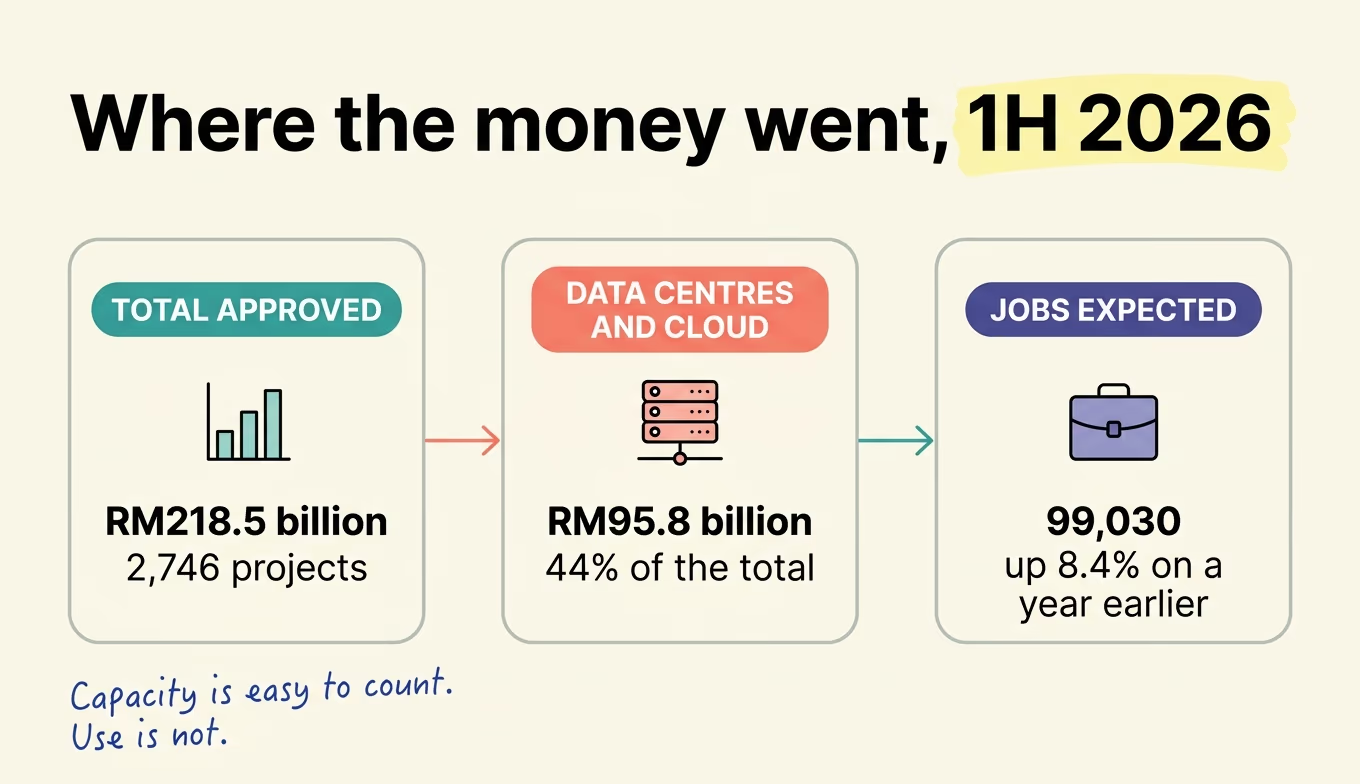 Approved investment is a commitment, not a result. Source: MIDA
IDEAS economist Doris Liew put the catch plainly. Those investments "can strengthen digital infrastructure and attract capital, but their direct employment effects may be limited," she told the paper.
Putra Business School's Assoc Prof Ida Md Yasin made the same point. Adoption is fine short term, she said, but "in the long-term strategy, we need to become part of the users, producers, and countries doing research and development."
A server rack in Johor does not make a Penang furniture maker faster.
Our take: money was never the blocker
We build software for Malaysian businesses and use AI daily to do it. So take this from someone with a commercial interest in you spending money: a grant is not what is stopping you.
Business AI adoption in Malaysia reportedly rose to 38% in 2026, from 27% a year earlier. Almost none of that came from a budget line. It came from someone picking one job and doing it differently.
What we see instead is a company that bought the tool and never named the process. The subscription renews, nobody owns the workflow, and twelve months later it is cancelled and AI gets declared overhyped. That costs the same with a grant or without one.
LGMS founder Fong Choong Fook named the version that hurts: "The greatest risk is deploying AI without fully understanding what data it can access, what decisions it can make and what actions it is authorised to perform." His sharper line: "An organisation may outsource the technology, but it cannot outsource responsibility for the information entrusted to it."
Three things to do before 9 October
- Pick one process and price it. The quotation that takes 40 minutes, the stock report rebuilt every Monday. Write down the hours per week. That number is what any tool has to beat, and what a grant application asks for anyway.
- Ask your vendor Fong's questions. What data does this system read, where is it stored, can it train someone else's model, who can see it. Vague answers are your answer.
- Check what you already pay for. The HRD Corp levy, 1% of monthly wages at 10 staff or more and 0.5% for voluntary registrants with 5 to 9, is a training budget already sitting there. Non-contributors should ask SME Corp what applies.
Do those three and Budget 2027 becomes useful. Skip them and it stays a headline.
What Budget 2027 is likely to fund
Our read: adoption and skills money aimed at SMEs, with data centre incentives left alone because the investment figures are politically useful. The hard part, getting a 20-person company to change how it quotes a job, stays unsolved by any budget. Our AI grant Malaysia guide covers what the 2026 cycle funded.
Where does AI actually fit your business, not where a grant says it should? Let's chat, or see how we work on AI solutions. Honest take, including when you do not need us.
General information, not financial or legal advice. Figures come from published sources, and grant details may change. Verify with the relevant agency.