A builder at Browser Use had an AI search Google Flights, Zürich to London, in about 7 seconds, and the model that chose every click never wrote a word. That model is Jev AI, released by TypeSafe on 15 September. It doesn't write. It decides, and says how sure it is.
Jev picked each button and field. A small chat model typed only the city names. The builder, Gregor Zunic, put the cost at US$0.0039.
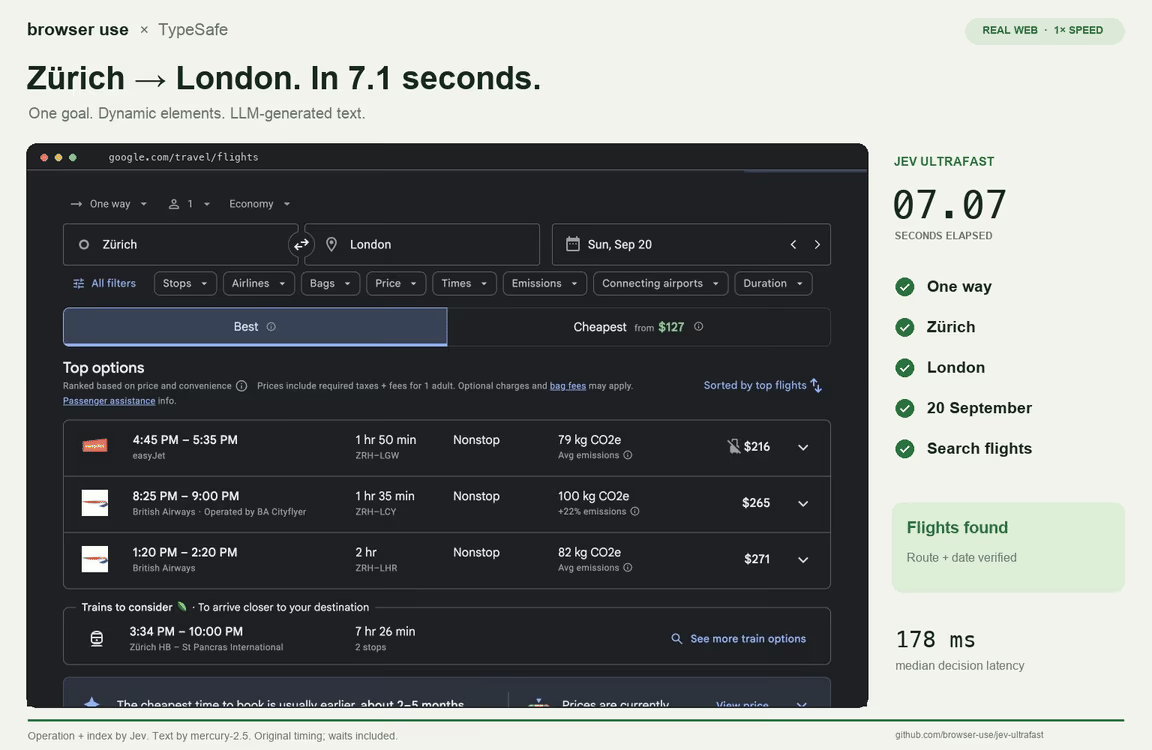 Flights found in 7.07 seconds. Source: Browser Use on GitHub
The demo only searched, and it was "three repeats of one task," not a reliability test. The US$0.0039 is the builder's estimate from token counts, not a bill.
If you pay for AI automation, part of that bill isn't writing. It's small decisions.
What is Jev AI?
Jev AI gives one of three kinds of answer: a pick from a list, a score on a scale, or a yes-or-no with a probability.
TypeSafe lists ten kinds of decision it is built for, including scoring, routing and checking another AI's work. It costs US$0.042 per million input tokens, with answers free. (A token is a small piece of text, often part of a word.)
Two jobs where Jev could save time or money
You won't use Jev yourself; it sits inside software someone builds for you. The scores below are made up.
A dental clinic's WhatsApp
A patient writes:
"Hi doc, saya buat extraction yesterday. Sekarang bleeding tak stop. Normal ke?"
You don't want a general chatbot deciding that alone. Jev answers the questions you set:
WhatsApp message
      ↓
     Jev
      ↓
intent:
  appointment       0.01
  price_question    0.01
  medical_question  0.24
  urgent_issue      0.74

needs_human:  true   0.96
safe_for_bot: false  0.93
      ↓
Your software
      ↓
Alert staff now
Another patient writes "Hi nak tukar appointment Sabtu 3pm ke Ahad boleh?" and gets:
intent      = reschedule
confidence  = 0.99
needs_human = false
The booking system takes that one. TypeSafe's own customer-service test works this way: Jev reads the message, code decides what happens.
                ┌→ booking system
                │
WhatsApp → Jev ─┼→ staff
                │
                ├→ CRM
                │
                └→ chat AI → customer reply
A chat AI writes the reply: "Boleh 😊 Saya boleh bantu tukar appointment. Ahad ada slot 11 pagi dan 2 petang." Jev never writes Malay, but it must read it, and TypeSafe says non-English is "handled but not equally well," so test your real messages. Jev's job is one question: what is this, and what should the software do?
An aircon contractor's enquiries
Two enquiries arrive:
"Boss 2hp inverter Daikin berapa?"
"Hi, we're opening a 12,000 sqft restaurant in PJ. Need approximately 18 units including installation. Can someone come for site visit?"
For the second, Jev returns:
intent            → quotation
residential       → false
commercial        → true
lead_value        → HIGH
purchase_intent   → 0.94
needs_site_visit  → 0.91
spam              → 0.01
Then:
high-value lead
      ↓
create CRM lead
      ↓
assign senior salesperson
      ↓
WhatsApp the salesperson now
The "berapa?" message stays in the automatic flow. Your staff only get interrupted by enquiries that need them.
Sure acts alone, unsure goes to a person
TypeSafe's confidence guide lets confident answers act alone, sends unsure ones to a human, and adds:
Different actions within the same system should be gated at different levels depending on the consequences of getting it wrong.
A misread price question costs a minute. A missed bleeding patient costs far more. And the score is tuned across many answers, which TypeSafe says "does not guarantee that an individual answer is correct."
Jev is days old, in early access, and its maker can't prove the price isn't subsidised, so we wouldn't move a live workflow onto it yet. Splitting decisions from writing is worth doing now.
What to do this week
List three calls your staff make by hand every day, with each one's possible answers. Mark which could run alone and which must reach you, then ask whoever builds your systems whether a decision model could take them.
Gotchaa Lab builds AI automation for Malaysian businesses. Weighing an AI quote? Let's chat for an honest take.