ILMUcode is YTL AI Labs' desktop AI coding app for Mac and Windows, launched on 1 October 2026. An AI agent inside it plans, writes and checks your code, much like Claude Code or Cursor. Universiti Malaya is the first university to give it to students: 800 first-year computer science students each get RM100 of credit a month for three months.
The model inside is ILMU-GLM-5.3, "built in partnership with Z.ai", a Chinese AI lab. YTL also says ILMUcode brings Z.ai's GLM-5.3 to Malaysian developers "through sovereign AI infrastructure". The two lines describe different things.
Whose model is inside ILMUcode?
Z.ai released GLM-5.3, its flagship coding model, in August and put the weights on Hugging Face on 28 August. Anyone with enough hardware can download and run it.
YTL didn't hide this. CEO Foong Chee Mun says YTL partners with companies "from NVIDIA to Z.ai to bring their capabilities into the ILMU family, while remaining sovereign." What YTL hasn't said is how much ILMU-GLM-5.3 differs from Z.ai's version.
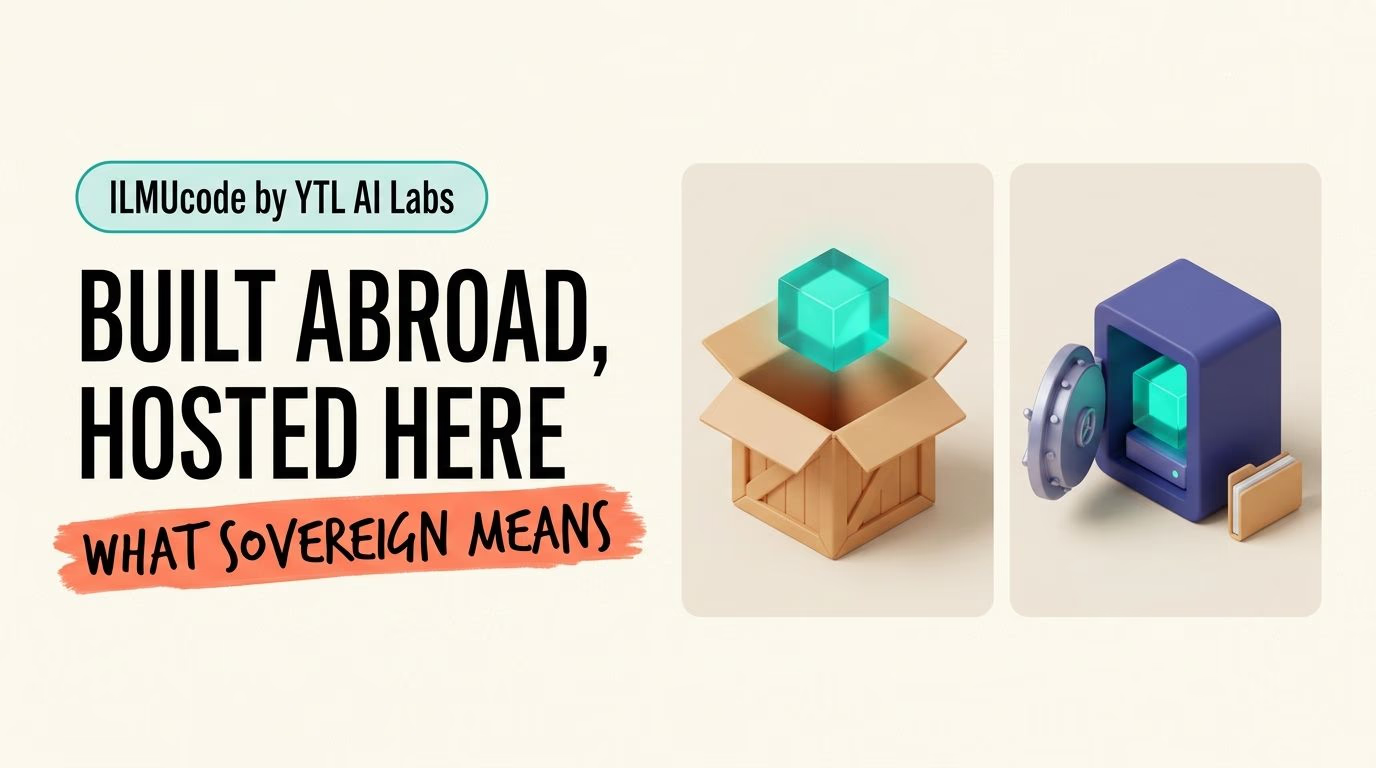
What "sovereign" means in ILMUcode
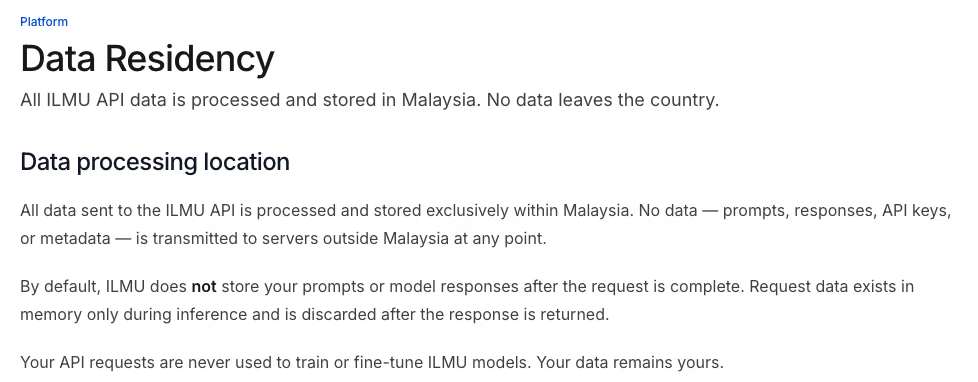
Where your code is processed. ILMUcode runs on ILMU's normal API, and ILMU's data residency page says:
 Captured 3 October 2026. Source: ILMU docs
All data sent to the ILMU API is processed and stored exclusively within Malaysia.
By default, ILMU does not store your prompts or model responses after the request is complete.
Your API requests are never used to train or fine-tune ILMU models.
We found no independent audit, but it answers the main question: through ILMU, your code stays in Malaysia and doesn't go to Z.ai.
Our reading: this is good news if you read the label right. The model comes from China. What's Malaysian is the hosting, and for code that must stay onshore, that's the part that counts.
How much does ILMUcode cost?
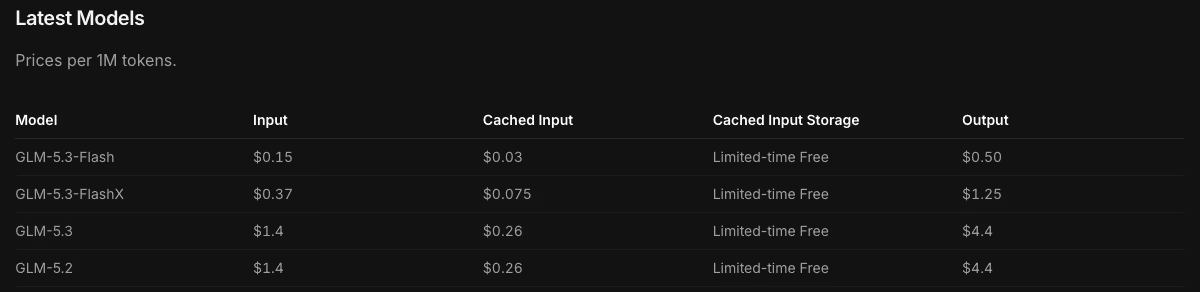
The app is free and you pay per use. Places are limited for now, with a waiting list. ILMU's public price pages didn't list the 5.3 models on 3 October, so these are SoyaCincau's figures:
| Per 1M tokens | ILMU GLM 5.3 | Z.ai GLM-5.3 | Z.ai in ringgit |
|---|---|---|---|
| Input | RM5.15 | US$1.40 | RM5.72 |
| Cached input | RM0.95 | US$0.26 | RM1.06 |
| Output | RM16.05 | US$4.40 | RM17.98 |
 Captured 3 October 2026. Source: Z.ai
At Bank Negara's noon middle rate on 2 October 2026, RM4.0855 to the US dollar, ILMU is about 10% cheaper. Its 8% SST shrinks that to 3 to 4%, before any tax or card fees on Z.ai's side. Either way, ILMU comes out cheaper.
Is ILMUcode any good at coding?
Nobody outside YTL knows yet. YTL says ILMUcode "ranks among the world's leading coding models on coding benchmarks such as Terminal-Bench 2.1 and DeepSWE", but published no scores.
Z.ai's model card lists its own GLM-5.3 at 88.2 on Terminal-Bench 2.1 and 66.9 on DeepSWE v1.1, against 88.8 and 72.7 for GPT-5.6 Sol in the same table. Those are Z.ai's runs of its own model, not ILMU's.
Our ILMUchat Pro comparison last month found ILMU's coding untested in public, and we've seen no public test of ILMU's version since. We haven't run ILMUcode on client work either, so this is a read of the label rather than a review.
Should Malaysian teams use ILMUcode?
Your developer or vendor usually makes this call. Ask them:
- Which AI coding tool reads our code, and where does it send it? In our experience, few clients ask.
- If our code handles personal data, have you tried a Malaysia-hosted option? Put one real task through ILMU-GLM-5.3 and compare it with the current tool before switching.
For code that never touches customer data, use whatever does best on your codebase. Where data must stay in Malaysia, ILMUcode is a real option, priced a bit under Z.ai. Or keep code fully in-house with a local model.
At Gotchaa Lab we use AI coding tools daily and help teams choose which ones touch their code. Let's chat if you're weighing ILMUcode, or see our AI solutions work.
Not legal or financial advice. Prices and exchange rates change.