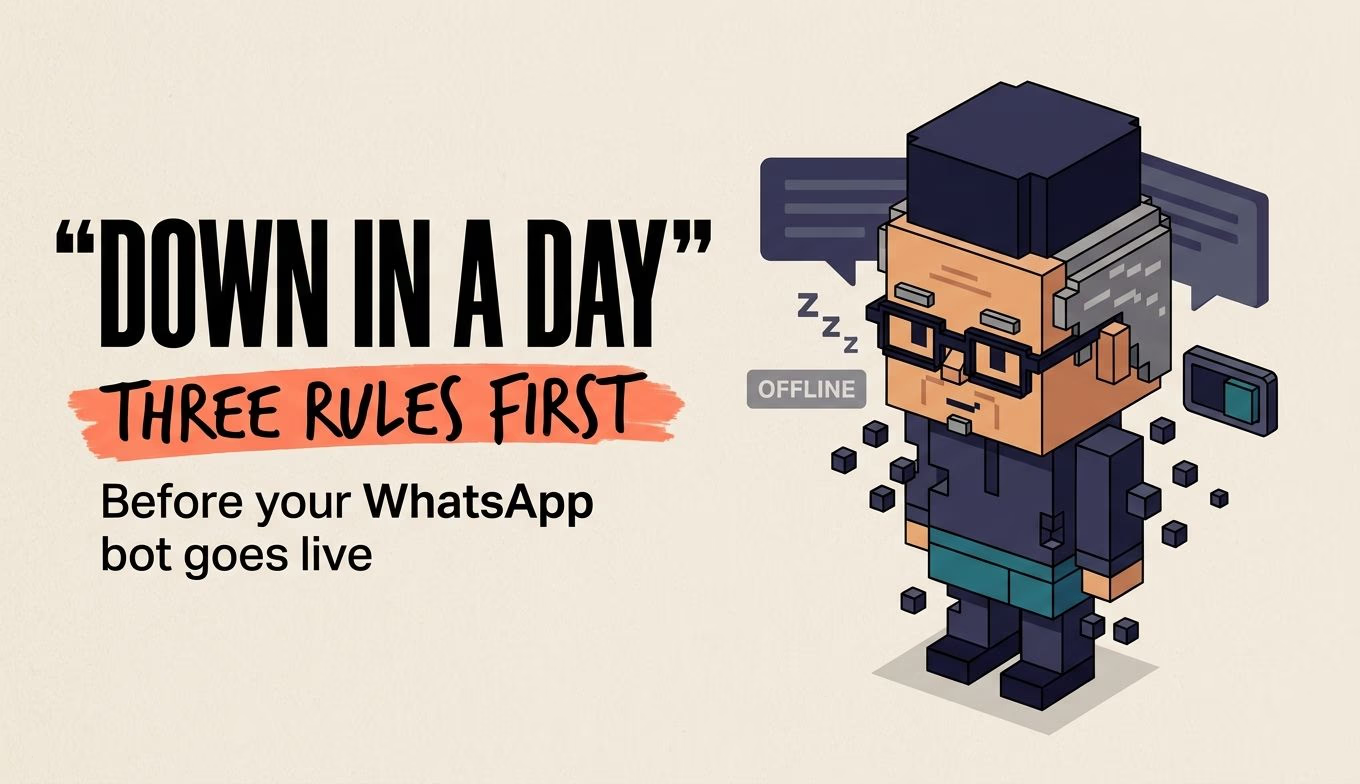
Malaysia just watched an AI chatbot fail in public. PMX AI, a WhatsApp avatar of Prime Minister Anwar Ibrahim, launched on 18 July 2026 and was pulled offline barely a day later. Built by Zetrix AI (formerly MyEG), it went dark behind a notice about "system upgrades" and stayed down past its own promised return time. Before that, people got it to do things it was never meant to do. One user coaxed it into writing C# code for making PDF files. Others steered it into loaded political questions it had no business fielding.
If you run a business here, this is a free lesson. A WhatsApp AI chatbot in Malaysia is an automated assistant on your WhatsApp Business line that answers customer questions round the clock. Done well it saves you hours. Done badly, it becomes the story, the way PMX AI just did. WhatsApp is the front door for most Malaysian companies, so these bots are on plenty of shopping lists right now, and the PMX launch put the two failures you pay someone to engineer out on full public display.
What actually went wrong with PMX AI
Two things broke. They are the same two things that break small business bots.
First, it answered questions outside its job. A digital avatar of the PM has one purpose: talk about the government and its policies. Instead it wandered into writing code and dodging constitutional questions. An AI model tries to be helpful with almost anything you put in front of it, which sounds lovely until it is your bot promising a refund you never approved or quoting a price you never set. These systems get talked past their limits more easily than most people expect, something we unpacked in our piece on the Fable 5 jailbreak.
Second, it went down with nothing behind it. When PMX AI failed, users hit a dead end. For a novelty avatar, that is embarrassing. For your business, a bot that dies at 11pm on a Friday with no backup means every customer message that night vanishes into silence.
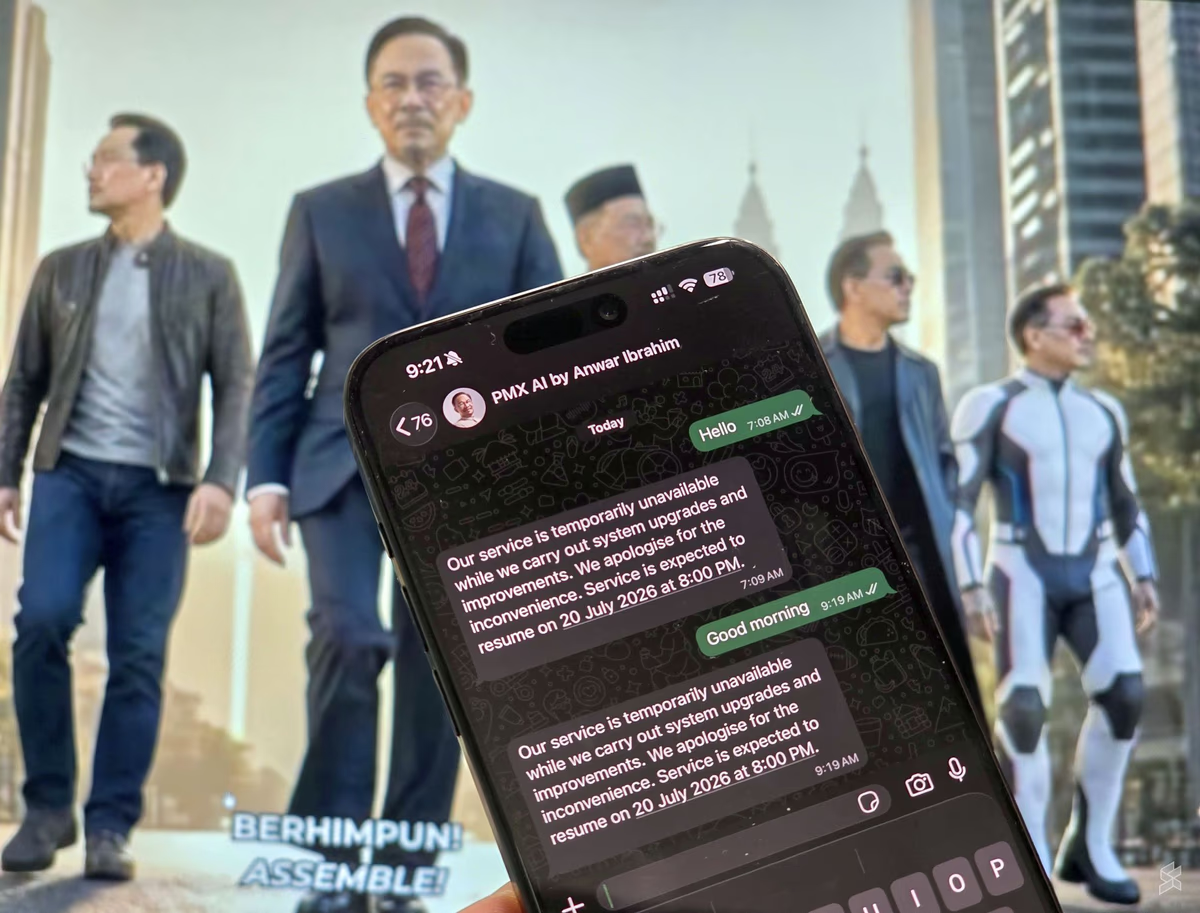 The PMX AI service showing its "temporarily unavailable" notice, still down past its promised return time. Source: SoyaCincau
Three rules before you switch on a WhatsApp AI chatbot in Malaysia
You do not need to be technical to hold a vendor to these. They are the difference between a bot that helps and a bot that becomes the story.
1. Scope: give it one job and a refusal rule. Decide the narrow set of things the bot handles, like order status, opening hours, booking a slot, common product questions. Then write the rule for everything else: "I can't help with that, let me pass you to the team." A bot with no refusal rule is the bot that ends up writing C# code on the Prime Minister's WhatsApp.
2. Guardrail: it cannot be talked off its job. Scope on paper is not enough. Someone will try to trick it, out of curiosity or mischief. The bot needs a boundary that holds even when a customer pushes, changes the subject, or pretends to be the boss. This is the part cheap builds skip, and it is exactly the part that ends up in a screenshot on X.
3. Human fallback: hand to a person when unsure or offline. The bot should know when it is out of its depth and pass the conversation to a human, cleanly. And when the system itself is down, messages should still land somewhere a person reads them the next morning, not disappear. Without that clean hand-off, the same bot quietly turns from a help into a headache.
In our experience, the bots that embarrass a business are almost never too dumb. They are too eager, wired to answer everything, with no plan for the moment they are wrong or offline. AI is genuinely good at the boring, repetitive share of WhatsApp messages, the "are you open", "where's my order", "how much ah" questions that make up most of the inbox. The skill is not making it talk. It is deciding what it must never do, and where it hands off. If you want the practical side of wiring one up for a Malaysian SME, we walked through that in our WhatsApp AI use-case guide.
Two questions to ask any WhatsApp AI chatbot vendor in Malaysia
Before you sign anything, ask these. The answers tell you fast whether they have done this before.
- "Show me what it does when someone asks something off-topic." A good answer is a live demo of the bot refusing and offering a human. A bad answer is a vague "the AI handles it, don't worry."
- "What happens to a customer's message when the bot is unsure, or the system is down?" You want a clear path: escalate to a person, log it, follow up. If the honest answer is "nothing," you have just found PMX AI's problem sitting inside your own quote.
How this affects Malaysian businesses
WhatsApp is where Malaysians actually talk to companies. That makes an AI chatbot both tempting and risky, because any failure happens in the one channel your customers are already watching. The upside is real: built well, it is customer service automation that fields after-hours questions in Malay, English, and Mandarin without adding headcount, provided you test it on customers who don't write like your team first. The rule is simple. Switch it on for a narrow job, guard it, and give it a human backstop. Skip those three and you are not saving time, you are scheduling your own outage.
Thinking about putting AI on your WhatsApp line? Let's chat. We will give you an honest take on what it should and shouldn't do, no sales pitch. You can also see how we think about this in AI solutions.