NEXSEC 2026 is the Malaysian Communications and Multimedia Commission's (MCMC) yearly cybersecurity programme. It runs on 25 and 26 November 2026 at MITEC in Kuala Lumpur, from 8:30 am to 5:00 pm. Free Malaysia Today (FMT) reported on 22 November that AI scams, deepfakes and voice impersonation are among its main topics, and that the event is open to the public.
Most of the programme is for telcos, banks and security teams. One morning of it is written for anyone who approves a payment.
What MCMC has confirmed about NEXSEC 2026
MCMC's official page describes NEXSEC2026 as a programme to build sector-wide preparedness, information sharing and cybersecurity talent. It names its audience as MCMC licensees, financial institutions, government agencies, industry, technology partners and academia.
The page and FMT's report confirm:
| Item | Detail |
|---|---|
| Dates | 25 to 26 November 2026 (Wednesday and Thursday) |
| Time | 8:30 am to 5:00 pm |
| Venue | MITEC, Kuala Lumpur |
| Opening, 25 Nov | Communications Minister Fahmi Fadzil, an MCMC and NACSA MoU, and the Global Anti-Scam Alliance (GASA) report presented to the minister |
| Also listed | Panels, technology talks, an exhibition, a Capture the Flag (CTF) contest and student talent programmes |
| NEXSEC 2026 registration | A form "to register your interest" on MCMC's page |
What is not confirmed: whether there is a ticket price. Neither source lists one, so check the form before you plan your day. MCMC also says the programme may change.
Which NEXSEC 2026 sessions suit a business owner?
Day 1 leans technical: quantum-safe communications, AI cyber defence and a roundtable for chief information security officers. If you have an IT lead, Day 1 is theirs.
Most of the scam talks are on the morning of Day 2, 26 November.
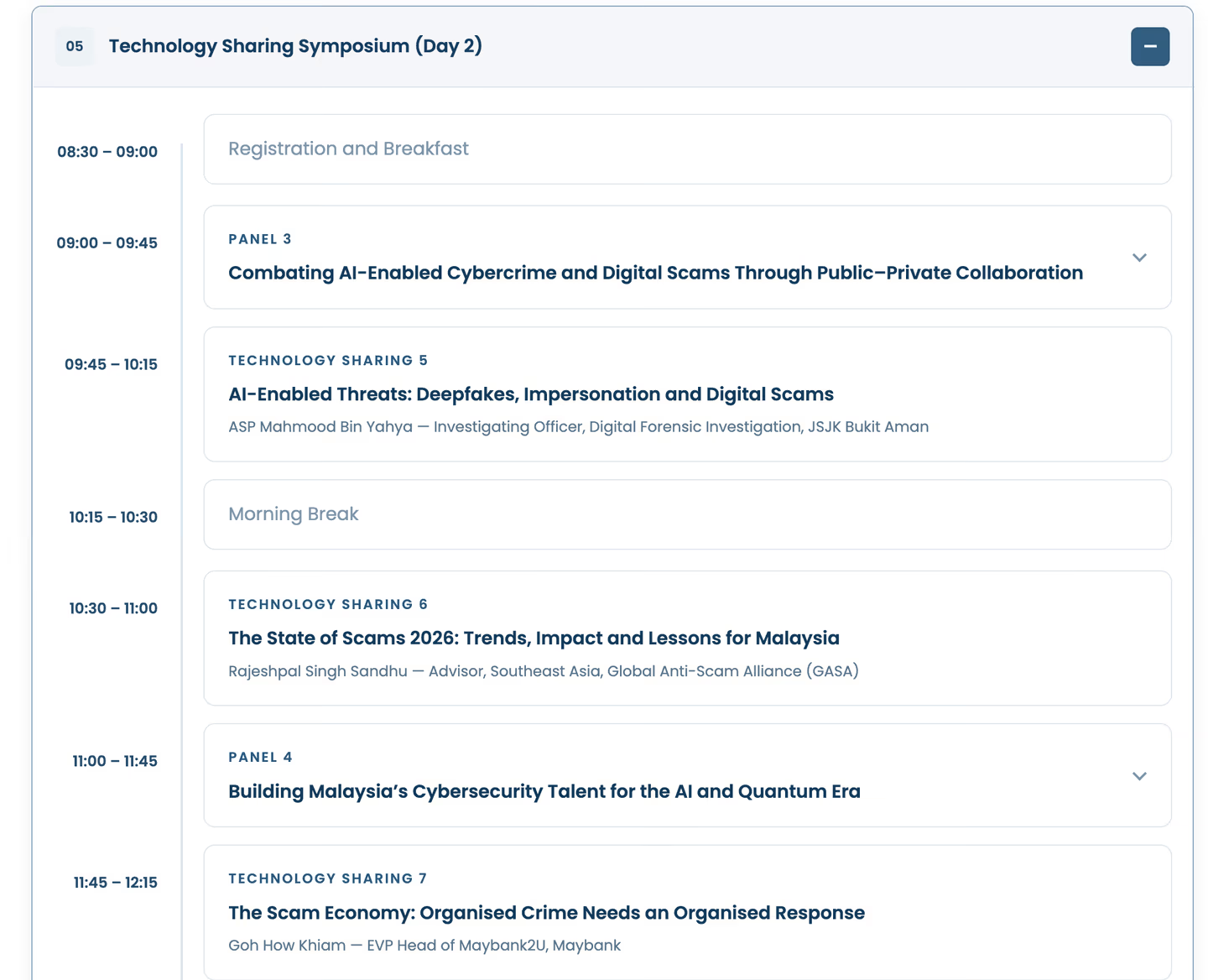 The Day 2 agenda on MCMC's NEXSEC2026 page, captured 22 November 2026. Source: MCMC
TECHNOLOGY SHARING 5 AI-Enabled Threats: Deepfakes, Impersonation and Digital Scams ASP Mahmood Bin Yahya, Investigating Officer, Digital Forensic Investigation, JSJK Bukit Aman
Source: NEXSEC2026, MCMC
For an owner, or whoever runs your accounts, these four are the ones:
- 9:00 am, Panel 3: combating AI-enabled cybercrime and digital scams, with speakers from MCMC, the National Scam Response Centre (NSRC), GASA and others.
- 9:45 am: the Bukit Aman talk above on deepfakes and impersonation. This is the one closest to the voice-call problem.
- 10:30 am: "The State of Scams 2026: Trends, Impact and Lessons for Malaysia" by Rajeshpal Singh Sandhu, GASA's Southeast Asia adviser.
- 11:45 am: "The Scam Economy: Organised Crime Needs an Organised Response" by Goh How Khiam of Maybank.
Send the person who releases payments. FMT notes that digital fraud can hit students, workers, parents and business owners alike.
What NEXSEC 2026 means for Malaysian businesses that can't attend
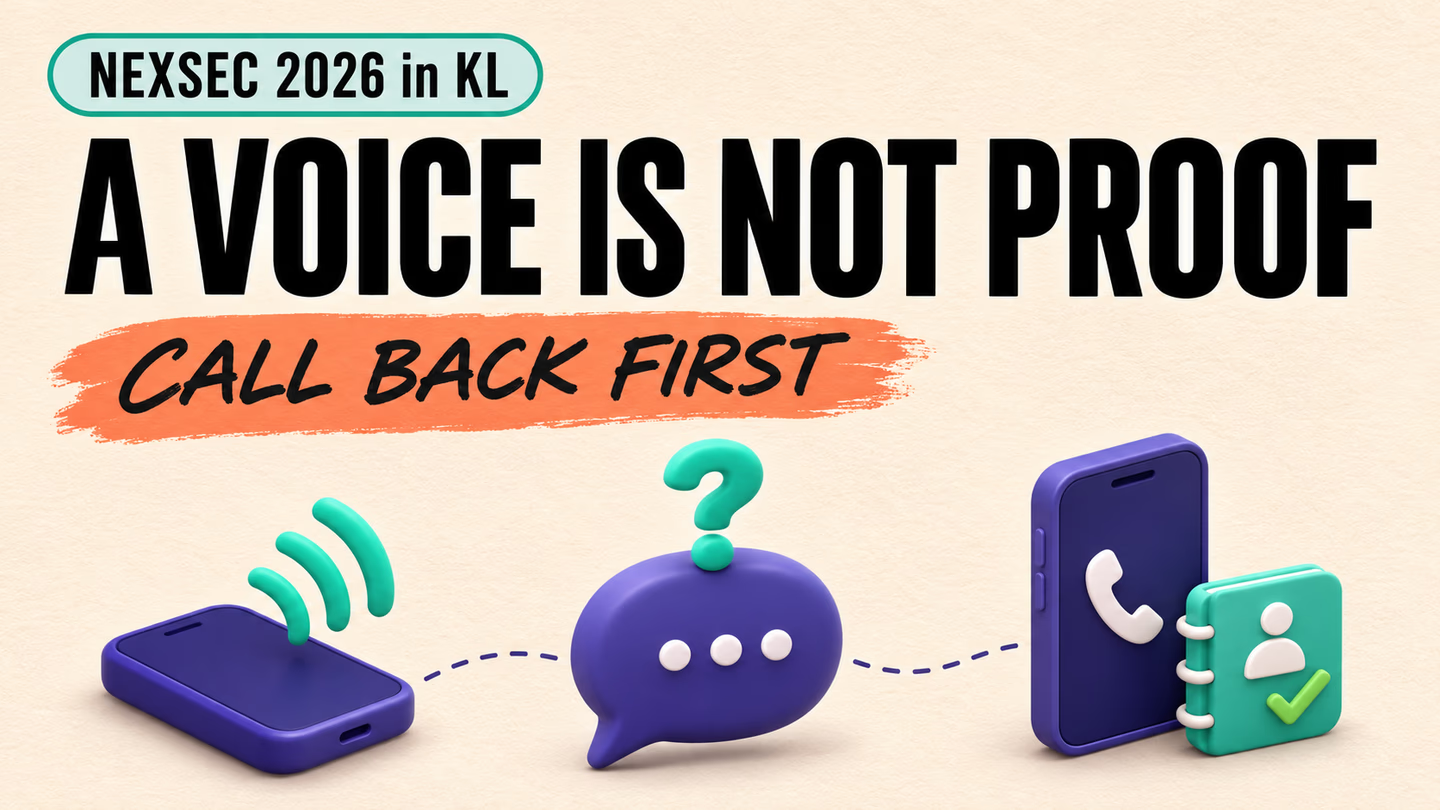
Our take: a two-day event in KL is useful, but most small offices won't send anyone. The lesson behind the agenda fits on a sticky note. A voice that sounds like your boss, a supplier or your bank is no longer proof of who is calling.
Voice cloning makes that sound cheap to copy. The defence is a habit. Agree on one rule this week:
- Any request to move money or change bank details gets confirmed by calling the person back on a number you already have saved, never the number that called you.
- The person who calls back is allowed to delay the payment. Nobody gets in trouble for checking.
We covered this call-back habit, and four other checks, in our post on the five AI threats named in Malaysia. It also covers what to do if money has already gone: call the NSRC at 997 straight away.
We don't know yet what the speakers will say, so we won't guess at GASA's figures before the report is public.
Want a second opinion on how your office checks payment requests? Talk to us and we'll tell you honestly what we would change, without a sales pitch.
This article is for general information and does not constitute professional cybersecurity advice. Event details may change; confirm them on MCMC's page.