
An enquiry landed in WhatsApp Business at 7:12pm on Friday. Nobody opened it until Monday morning. By then the customer had paid a deposit to whoever replied first, and the message is still sitting there with no answer.
AI lead qualification is software that catches an enquiry the moment it arrives, fills in what is missing, scores it against rules you wrote, writes the record into your CRM, then either replies or books the visit. In Malaysia that enquiry usually arrives on WhatsApp Business, a web form or an Instagram DM, which is exactly why nobody sees it after office hours.
We follow one company through this piece: a 14-person aircon supplier in the Klang Valley that installs, services, and sells parts on Shopee. The company is invented. The problem under it is not.
Speed is the whole argument, and it is not new. Harvard Business Review said it in March 2011: "Our research shows that most companies are not responding nearly fast enough." The enquiry has since moved to WhatsApp, and the problem stayed put.
What AI lead qualification does with a 7pm enquiry
Five steps, in order.
- It pulls every channel into one place and stamps the time the message arrived.
- It asks what your staff always ask. Which area, how many units, new install or repair.
- It scores the answers against your rules and returns a number with a one-line reason.
- It writes a CRM row with the full message attached, so nothing lives only in one person's phone.
- It routes. Urgent job to the technician on call, the rest onto the Monday list with a holding reply already sent.
The customer gets an answer in minutes. Your salesperson opens a list that is already sorted.
AI lead qualification lives or dies on your scoring rules
Most vendors skip this part. The AI is a commodity now. What you are paying for is the set of rules deciding what a good lead looks like in your business, and only you know those.
For the aircon supplier, a good lead is a Klang Valley address, three or more units, and a compressor that has already stopped. A bad lead is an installation job in a town with no service team near it. Neither sits in a vendor's template.
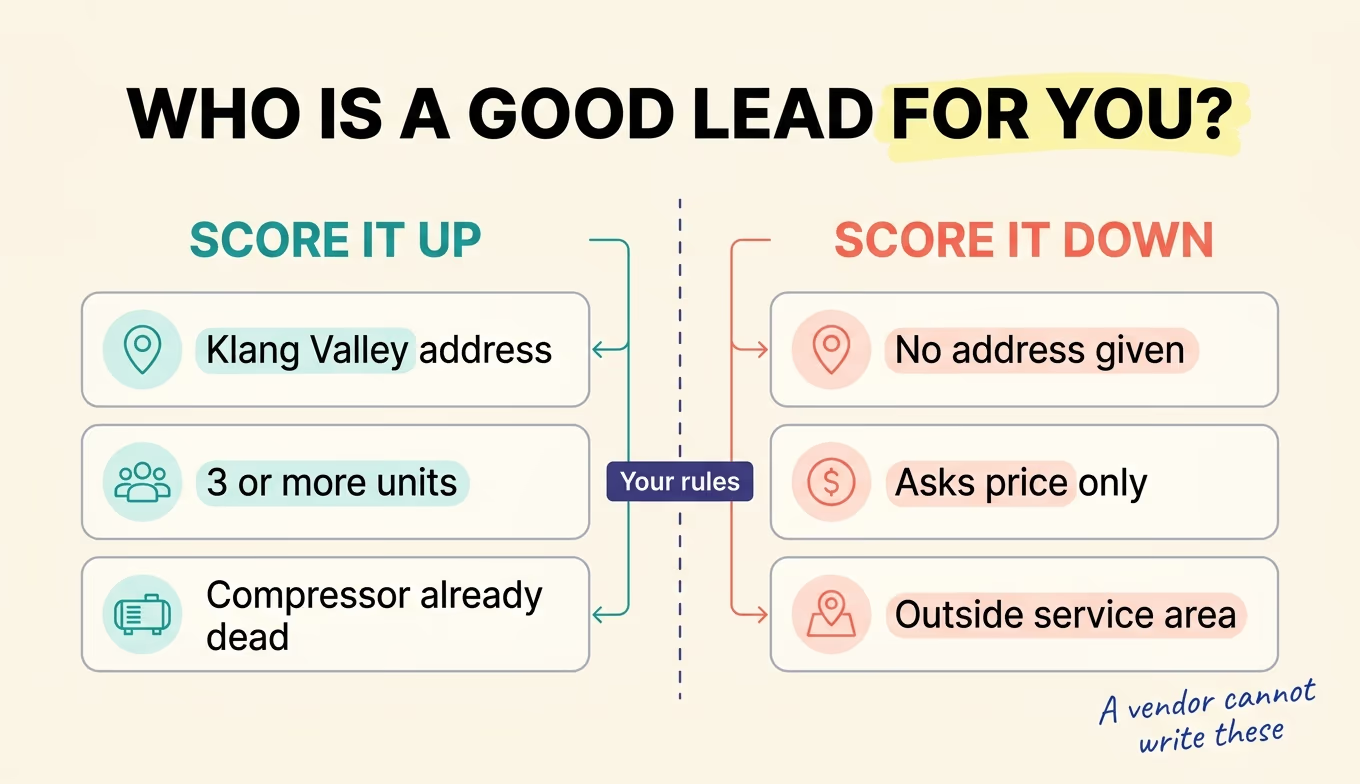 Your rules, written by the people who take the calls.
The shape does not change with company size. The rules come from the people who answer the phone, not from whoever writes the software.
A vendor who turns up with your scoring already written has not asked you anything. Walk them through three real enquiries from last month, including the one you regret, and watch whether their rules survive.
What happens to a lead nobody is sure about
Ask this in the first meeting. The answer separates a usable system from an expensive one.
A lead the system cannot score confidently goes to a person. Not to a bin, and not to a polite "sorry, we cannot help" reply. A human reads it, decides, and that decision becomes a new rule.
 Three exits, and one of them has to be a person.
Same for anything strange. A tender enquiry, a message in a language your rules do not cover, a customer already angry. Each is a human's job, and the system's role is to put it in front of them quickly with a summary.
Give it six months of corrections and the scoring gets sharp. Throw away everything the system finds confusing and you will never learn what you lost.
One workflow beats ten agents talking to each other
There is a fashion for networks of AI agents passing work between themselves. For this job it is the wrong shape.
One workflow, clear rules, a named point where a person takes over, and a clean CRM record at the end. That is the entire build, small enough to read on one page.
Anything fancier costs more and breaks in more places. The test here is not how clever the system is. It is whether you can still say what happened to one enquiry three weeks later.
Two numbers to track, and four things to demand
Watch two numbers and ignore the rest of the dashboard.
- Time to first reply, measured from when the message arrived, not from when your staff opened it.
- The share of qualified leads that book. If it climbs while bookings stay flat, your scoring has gone soft.
Before you pay, get four answers in writing: who writes the scoring rules, what happens to a lead the system cannot score, where the customer data sits, and how you get your CRM records out if you leave. Our four blanks a vendor must fill covers the rest.
We build this kind of workflow for Malaysian companies. The scoring rules are the build, and they have to come out of your own enquiries, so we write them with you instead of arriving with a template. If you want a second opinion on your enquiry flow before anybody quotes you, we can help with that too.
What it looks like when it works. The 7:12pm Friday enquiry gets an answer that evening, so the deposit comes to you instead of to whoever replied first. Your salesperson opens a list that is already sorted, with the reason for each score sitting next to it. The enquiry lives in the CRM rather than in one person's phone, so it survives a resignation and a lost handset. And three weeks later you can still say what happened to any single one of them.
You can start on Monday without hiring anyone. Open WhatsApp Business, scroll back to the last twenty enquiries, and write two columns: when it arrived, and when someone replied. Half a day of work. It tells you whether you have a scoring problem or a nobody-was-looking problem, and the second is much cheaper to fix.
Want that Friday enquiry answered before Monday? WhatsApp us with where your leads land today, or talk to us here.