She sat in the meeting room until eleven. No laptop, no email address, no door card. Three people had each assumed one of the others had sorted it.
AI employee onboarding is software that starts the moment a letter of offer is signed. It routes the approvals, raises access requests matched to that person's role, assigns equipment and training, answers approved policy questions, and shows the manager what is still not done. In Malaysia it also tracks the statutory registrations a new hire triggers.
We follow one company through this piece: a 14-person Klang Valley aircon supplier, invented. This is the automation it should not buy.
Onboarding is built around your approvers, your systems and your roles, so the permissions map has to come before the software. What follows is what we would demand of any vendor, us included.
What AI employee onboarding does in the first week
- The signed letter of offer starts it. Nothing runs off a verbal yes.
- It routes each approval to whoever signs: hiring manager, department head, system owner.
- It raises access requests by role. A technician and an account clerk get different lists, written once.
- It assigns equipment. Laptop, phone, van key, door card, each with an owner and a date.
- It assigns training and answers approved policy questions. Leave, claims, hours, parking.
- It shows the manager what is still open on Friday, before Monday arrives.
The first five are the demo. Step six stops the meeting-room morning.
The Malaysian half: EPF, SOCSO, EIS and the tax number
A new hire sets off a second list, and it has nothing to do with a laptop.
| What | Sits with | What a workflow holds |
|---|---|---|
| EPF registration | KWSP | Owner and status |
| SOCSO and EIS registration | PERKESO | Same, forms attached |
| Income tax number, Form CP22 | LHDN | A dated deadline |
| Bank account for payroll | Finance | Before payroll cut-off |
| Signed letter of offer | HR | Findable at audit |
Each body has its own rules, and they change. Read them on the agency's own page rather than an HR blog. Only one carries a day count we could quote from source.
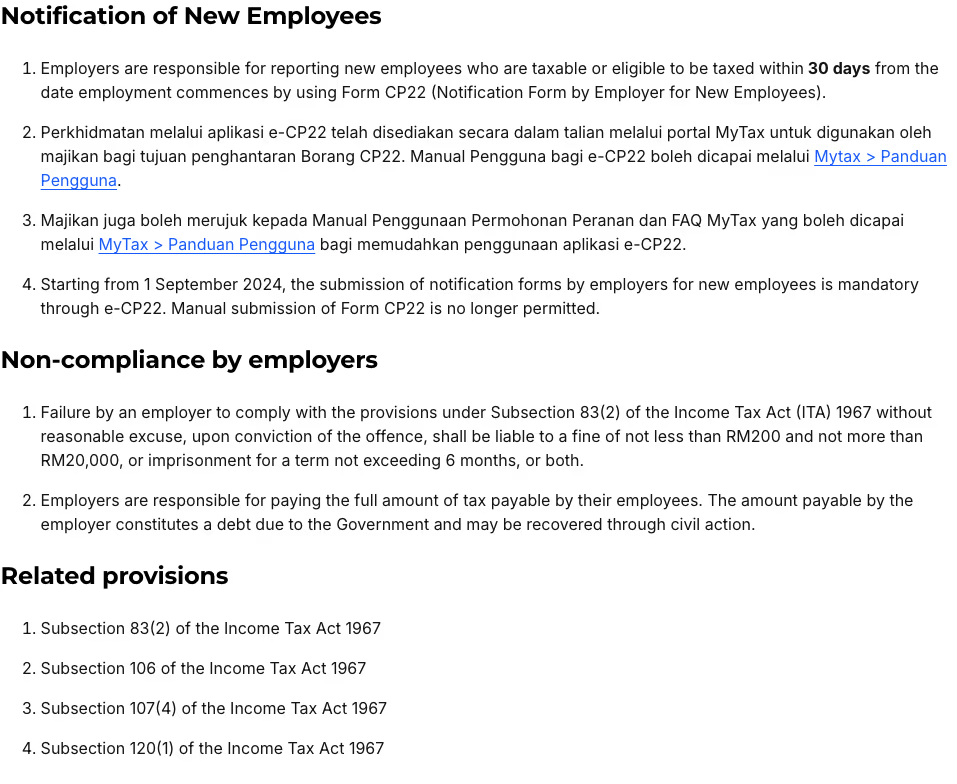 The Notification of New Employees page on hasil.gov.my, captured 27 August 2026.
"Employers are responsible for reporting new employees who are taxable or eligible to be taxed within 30 days from the date employment commences by using Form CP22 (Notification Form by Employer for New Employees)."
Source: Notification of New Employees, Lembaga Hasil Dalam Negeri Malaysia
The same page sets out the penalty: a fine of "not less than RM200 and not more than RM20,000, or imprisonment for a term not exceeding 6 months, or both". That is a clock a workflow can hold and a person cannot, because the person is busy in week one.
For EPF, SOCSO and EIS we found no deadline on those bodies' own current pages, so we are not printing one. Ask each agency, get it in writing, and use that date.
Does AI employee onboarding replace your HR staff?
No, and a vendor who hints otherwise is selling something they cannot build. Creating a real account still needs a manager and a system owner to approve it. That approval is a control worth keeping.
What goes away is the chasing: the third message asking IT whether the mailbox exists, the Friday spent working out which of eleven things is late. Your HR person keeps the judgment and gets the first day back.
Why AI employee onboarding in Malaysia is slow to sell
It comes down to permissions. Every other automation here reads your data. This one touches who may create an account, in which system, on whose say-so. That is a conversation with each system's owner, and it does not finish in one meeting.
That stretches the sale: the buyer sits in HR, the approvers sit in IT and the departments, and nothing is signed until the permissions map is. Any vendor quoting two weeks has not met your IT lead. Our four blanks a vendor must fill starts that conversation.
So it suits a company hiring often enough for the misses to become a pattern. Our aircon supplier hires twice a year. A printed checklist and one owner fixes their version for free, and we would say so before quoting.
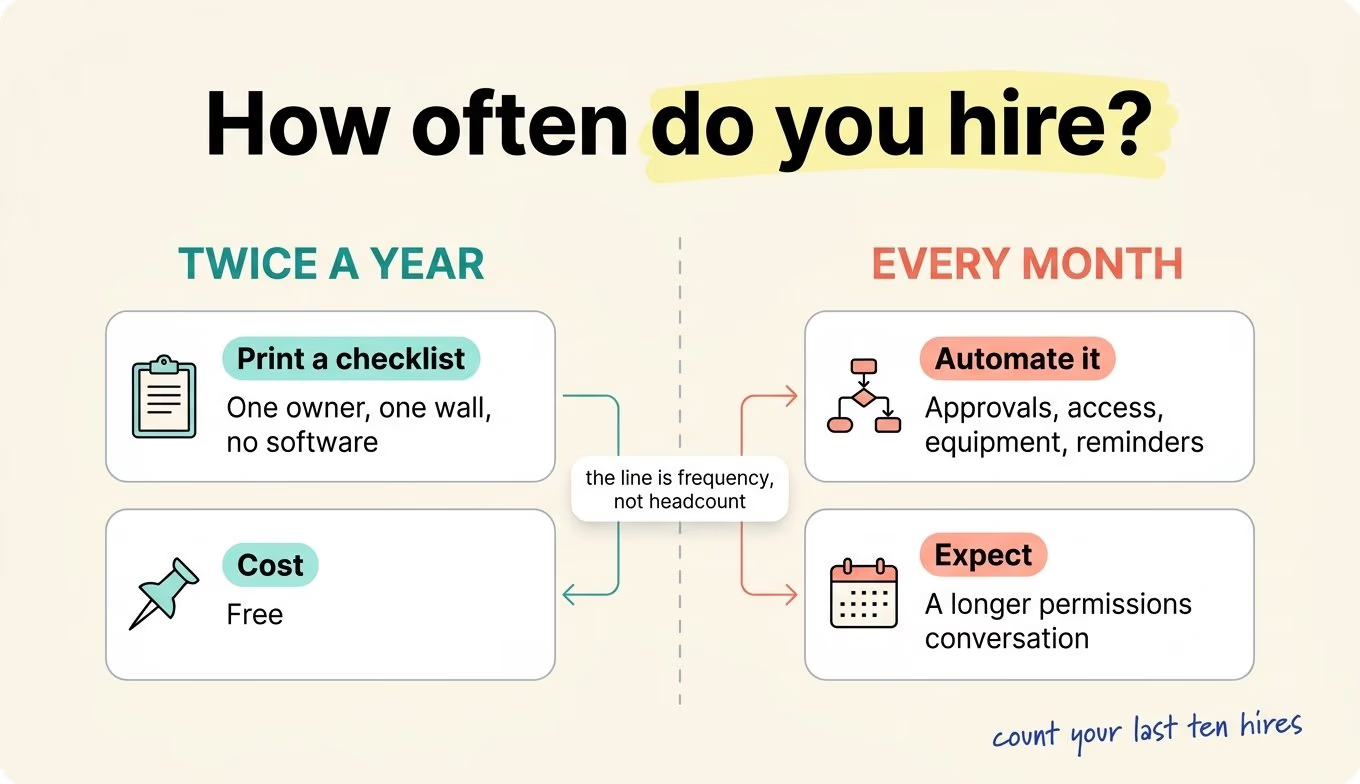 Our aircon supplier belongs in the left column.
The one number: day-one tasks missed
Take your last ten hires. Count what was not ready on the morning each walked in. Laptop, email, system access, payroll details, the signed offer on file.
None or one is a checklist problem. Four, and a different four every time, is the pattern this automation exists for. It is also the before figure you will want in month three.
What it looks like when it works. The new hire walks in on Monday to a laptop, an email address and a door card, because Friday's list showed what was still open while there was still time to fix it. The CP22 clock is held by the workflow instead of by whoever happens to remember. Your HR person stops sending the third message asking IT whether the mailbox exists. Nobody sits in a meeting room until eleven.
You can get it this week without hiring anyone. Ask the last three people you hired what was missing on their first morning. They remember clearly, and nobody has ever asked. One hour, and a better brief than any vendor proposal.
Start with whichever automation is easiest to check, not whichever demos best, which for most companies is document processing. We build AI systems for Malaysian companies, and we can help you map this one before anybody writes code.
Chasing whether a new hire's access is ready? WhatsApp us with what went missing on your last hire's first day, or talk to us here.
General information, not legal or tax advice. Verify your obligations with LHDN, KWSP and PERKESO.