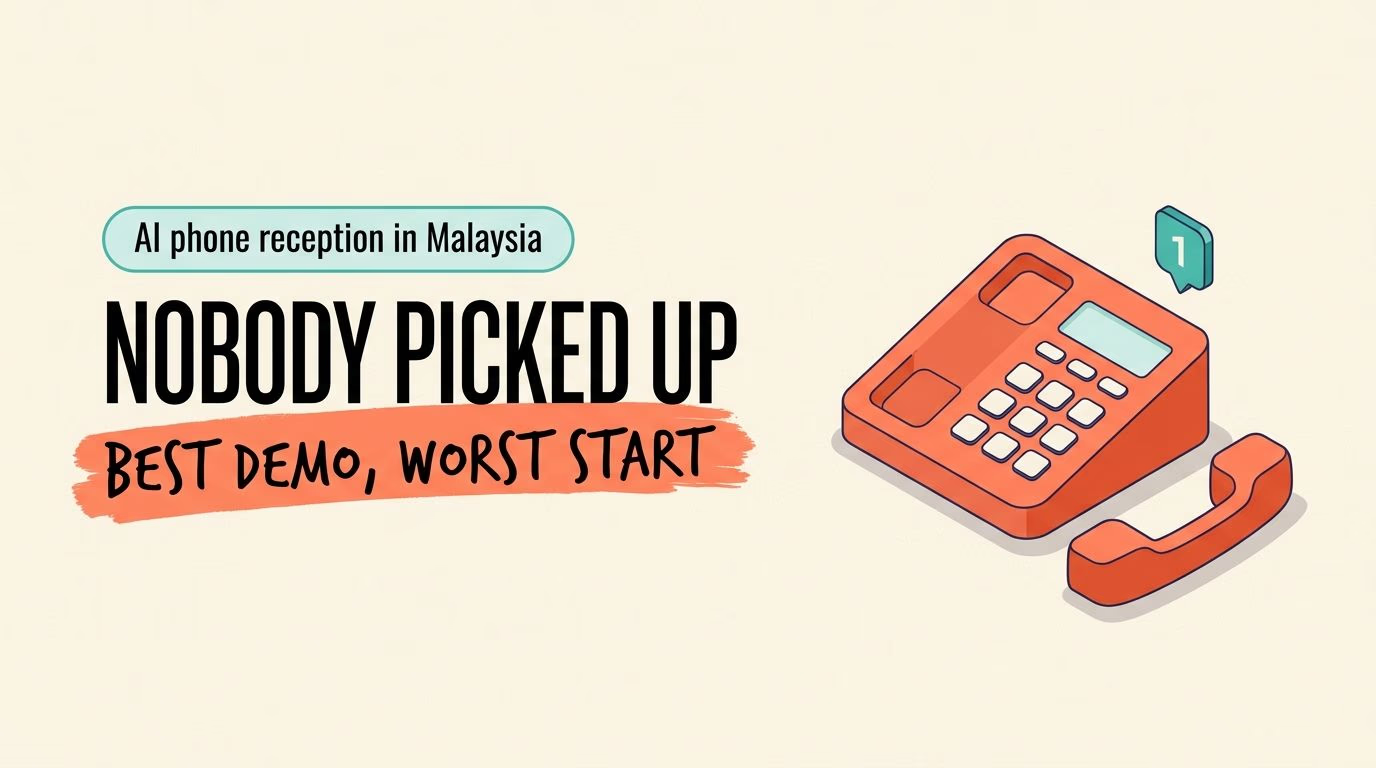
The compressor died at 9:40 on a Friday night. The customer rang, got four rings and a voicemail tone, and rang the next company on the list. Nobody at your shop knows that call happened.
An AI voice receptionist in Malaysia is software that picks up the phone when nobody can. It says plainly that it is not a person, takes the details your staff would have taken, checks your calendar, books the slot, and passes anything urgent or unclear to a human. Here, that call often arrives in two languages, sometimes inside one sentence.
We follow one company through this piece: a 14-person aircon supplier in the Klang Valley. The company is invented. The problem under it is not.
A voice agent is built around your calls, your slots and your transfer rules, so nobody can hand you one off a shelf. What follows is what we would demand of any vendor, us included.
What an AI voice receptionist in Malaysia does with a 9:40pm call
- Answers on the second ring and says, in the first sentence, that it is an AI assistant.
- Names the service and asks what has stopped working.
- Asks what your technician always asks. Address, how many units, when it stopped.
- Reads your calendar and offers real slots, not "someone will call you back".
- Repeats the booking out loud, then confirms by SMS or WhatsApp.
- Stops. Anything urgent, angry or unclear rings a person's phone with a summary attached.
The first five steps are the demo. Step six is the product.
Why an AI voice receptionist is the hardest of these systems to run well
If you are picking a first project, start with documents instead. This is the reason. A document workflow fails quietly, in a draft nobody has approved. A voice agent fails out loud, on a bad line, while a customer with a dead compressor listens to it get the address wrong. It also fails in ways no demo shows: traffic behind the caller, someone talking over the greeting, and a caller who says the word "gas".
That last one is not a routing problem. It is a decision about when your software must stop talking and make a human's phone ring. Write that rule yourself.
An AI voice receptionist in Malaysia has to follow two languages at once
"Boleh datang esok tak? My compressor dah rosak since semalam." One caller, one sentence, two languages. Normal here, and the thing most voice systems were never tested on.
So test it the way your customers speak. Take twenty real recordings off your own line, not the vendor's audio.
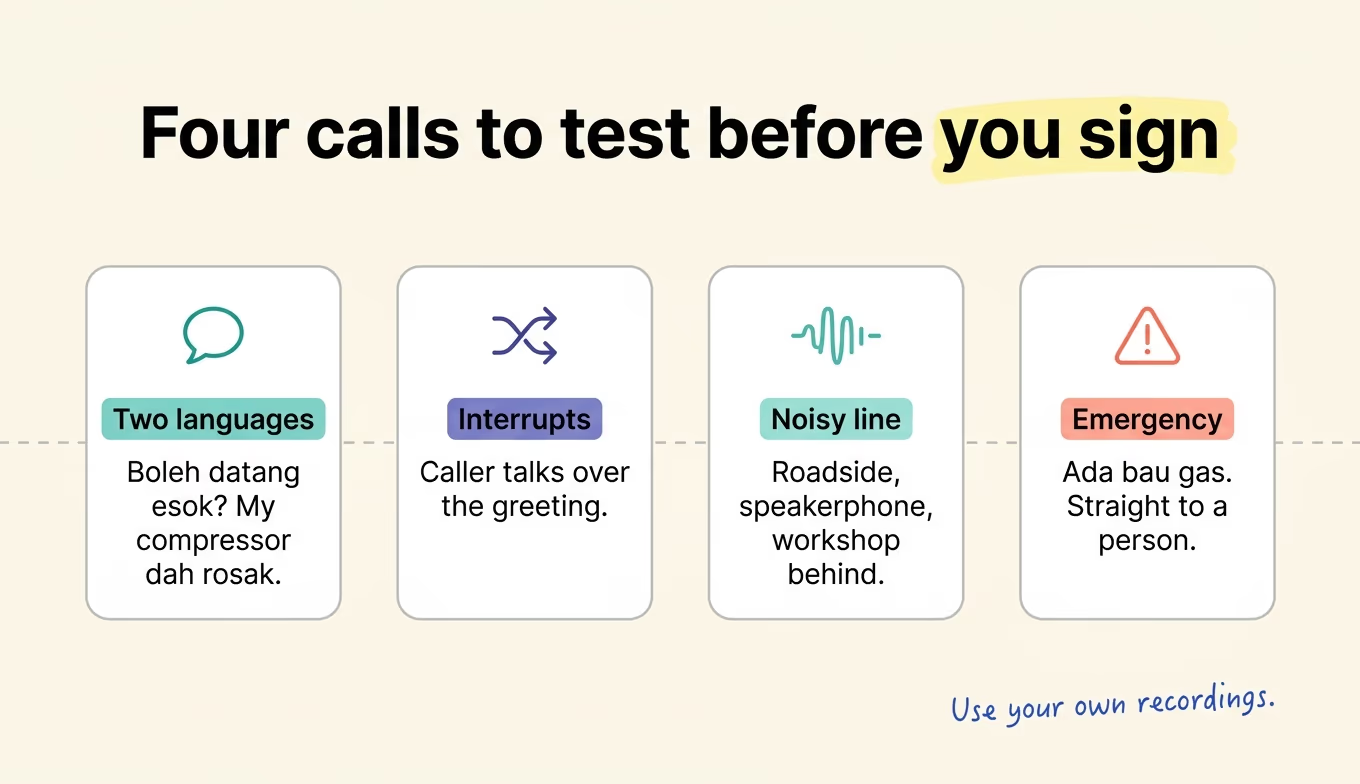 A vendor who demos on clean English only is telling you what they built.
What the PDPA settles about recording the call, and what it does not
Most of these systems record every call, and some keep the audio to train on. Ask which, before you sign. The Personal Data Protection Act 2010 already covers what a recording is, and its definition of processing reads: "collecting, recording, holding or storing the personal data".
Then there is how the customer is meant to be told.
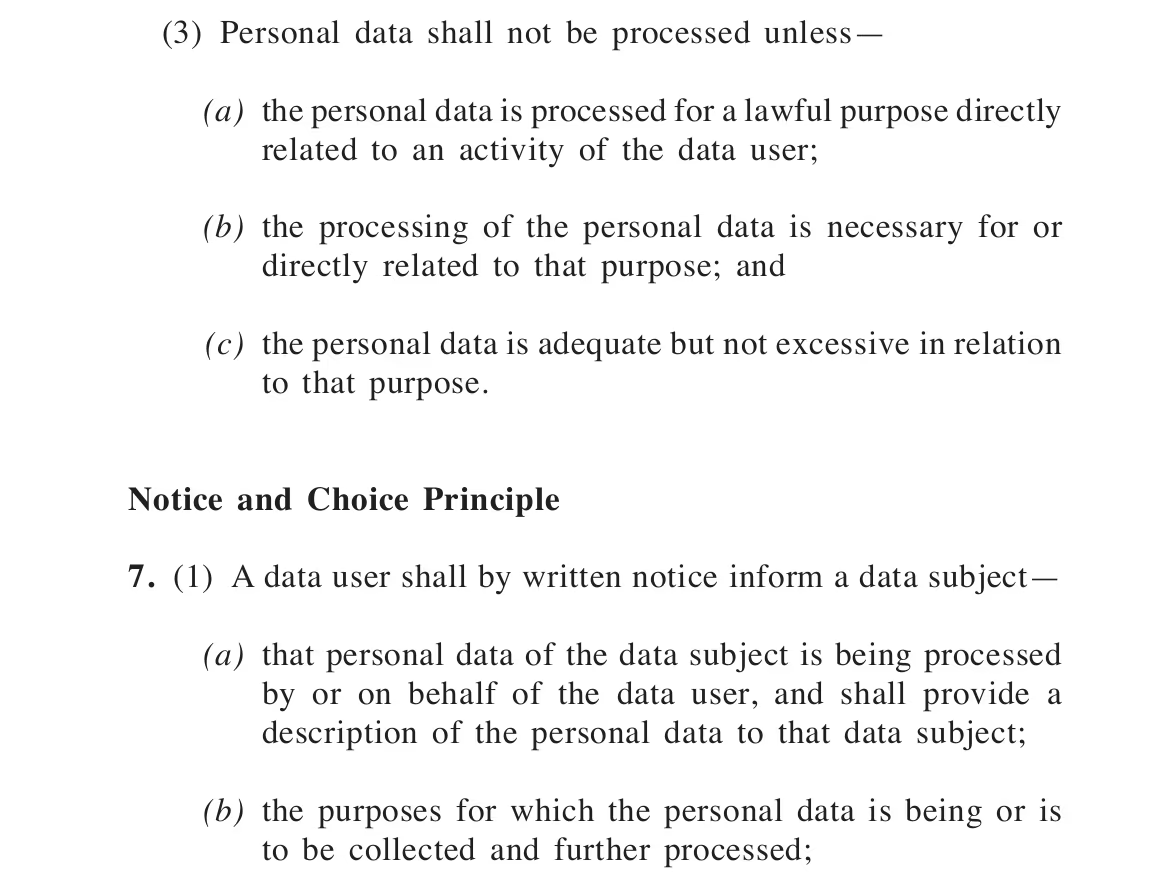 Section 7 of Act 709, from the government's own reprint as at 1 July 2023. Downloaded 27 August 2026.
"A data user shall by written notice inform a data subject ... that personal data of the data subject is being processed by or on behalf of the data user."
Written notice. The Act says nothing about recorded phone calls, and we found no guidance from the Commissioner that does. Do not read that silence as permission. Whether a line spoken at the start of a call meets that requirement, and whether the section 6 exceptions cover you, is a question for your lawyer. Get it in writing from someone who carries the liability. A 2024 amendment also replaced "data user" with "data controller", so check the current text.
Disclosing that the caller is talking to an AI is separate, and simpler. No rule we could find forces it. Do it anyway, in the first sentence.
Recovered bookings and cost per booking
Ignore the dashboard. Two numbers tell you whether this worked.
The first is recovered bookings: jobs booked from calls that came in after hours or would have gone to voicemail. Get the before number first, from your phone bill.
The second is cost per booking. Take everything the system costs in a month and divide it by those recovered bookings, then hold that against the margin on one service job. If it costs less than the margin, the argument is finished. If it costs more, you bought a very good demo.
Get four things in writing before you pay: who writes the transfer rules, what the agent says when it does not understand, where the recordings sit, and how you get your bookings out. Our scoping questions cover the rest.
What it looks like when it works. The 9:40pm call gets an answer and a slot instead of a beep. Monday starts with jobs already on the calendar rather than a list of voicemails to work back through. Nobody keeps a phone by the bed to catch the ones that matter. The customer with the dead compressor books with you because you picked up, not because you were the cheapest name on the list.
You can do the first half tonight without hiring anyone. Ring your own main line at 9pm and hear what a customer hears. Then open last month's call log and count the after-hours calls nobody returned. That count is the business case, and you can have it by Friday.
Losing jobs to a voicemail tone? WhatsApp us with what happens to your calls after 6pm, or talk to us here.
This article is general information, not legal advice. Get advice on call recording and PDPA obligations from a qualified Malaysian lawyer.